
Biofertilizers Market Size, Share, Growth, Report 2026 to 2035
The biofertilizers market report segmented by By Product (Nitrogen Fixing, Phosphate Solubilizing, and Other Products), By Application (Seed Treatment, Soil Treatment, and Foliar Spray), By Crop Type (Cereals & Grains, Oilseeds & Pulses, Fruits & Vegetables, and Other Crop Types),By Form (Dry and Liquid), By Distribution Model (Direct Sales (B2B), Distributor and Dealer Networks, and Online Platforms / E-commerce)-Global Industry Analysis, Size, Trends, Leading Companies, Regional Outlook, and Forecast 2026 to 2035
Content
What is the Current Biofertilizers Market Size and Share?
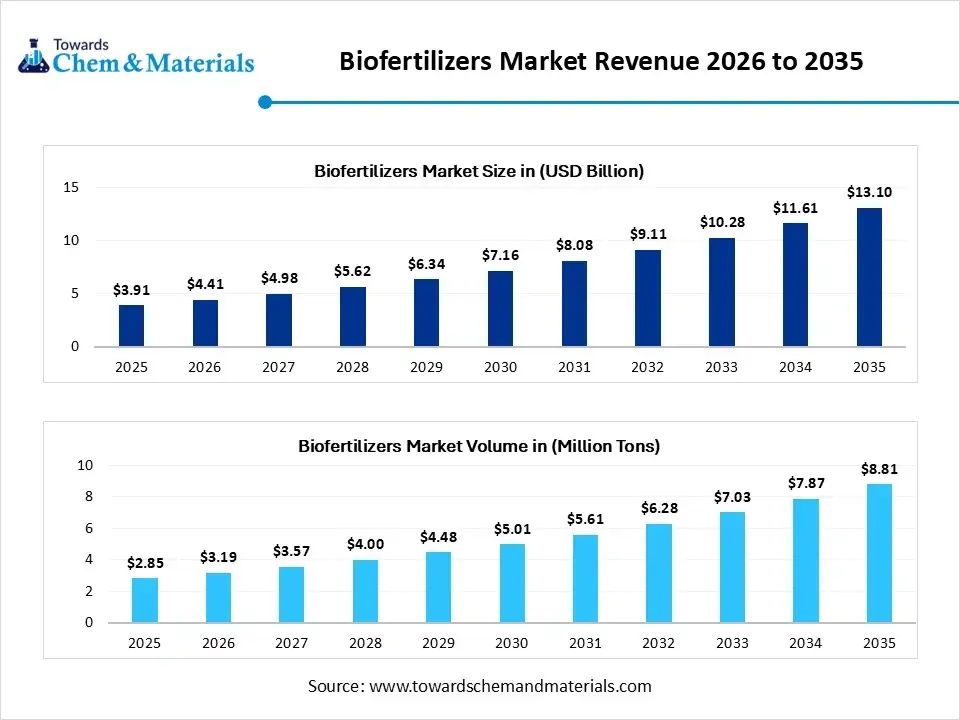
The global biofertilizers market size was estimated at USD 3.91 billion in 2025 and is expected to be worth around USD 13.10 billion by 2035, growing at a CAGR of 12.85% from 2026 to 2035. In terms of volume, the biofertilizer market is projected to grow from 2.85 million tons in 2025 to 8.81 million tons by 2035, exhibiting a compound annual growth rate (CAGR) of 11.95% over the forecast period from 2026 to 2035. Asia Pacific dominated the biofertilizers industry with the largest revenue share of 39% in 2025, reaching USD 1.52 billion, up from USD 1.72 billion in 2026. The growing inclination towards sustainable farming is driving the growth of the market.
The biofertilizer market is expanding steadily enough, in a way that global agriculture is increasingly leaning toward sustainable and kind of environmentally friendly farming behaviors. Biofertilizers include helpful microorganisms that, in a natural manner, improve soil fertility, boost nutrient uptake, and, in general, promote healthier crop development while also lowering reliance on chemical fertilizers. There are also bigger worries around soil degradation, food safety, and environmental pollution, and those concerns are pushing a pretty solid uptake in both developed markets and faster-growing economies. On top of that, government backing for organic agriculture, plus new progress in microbial technologies, and the wider use of precision agriculture, are all speeding up this market growth. And yeah, the demand for residue-free food products keeps climbing, along with climate-smart farming solutions, so biofertilizers just keep becoming more essential in modern agricultural systems worldwide.
Market Highlights
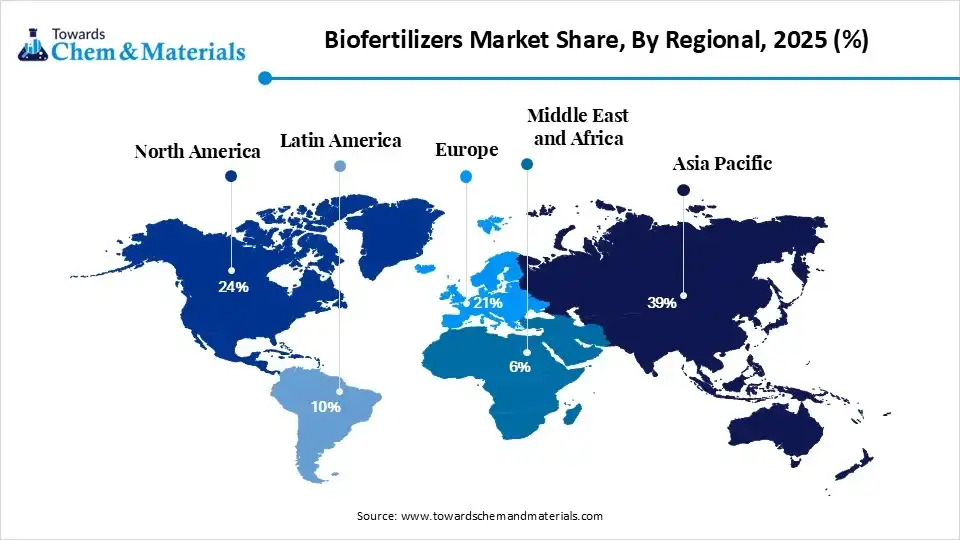
- By region, Asia Pacific dominated market by holding 39% share in 2025 and is expected to grow at the fastest, with a CAGR of 14.7% during the forecast period, due to large agricultural economies rapidly adopting sustainable farming inputs.
- By region, North America held the 24% market share in 2025 and expects notable growth in the market with 11.60% CAGR during the forecast period, driven by advanced farming technologies.
- By product, the nitrogen fixing segment dominated the market with the largest share of 49% in 2025, due to legume cultivation expansion.
- By product, the other products segment held the 20% market share in 2025 and is expected to grow at the fastest CAGR of 14.1% over the forecast period, as specialty biofertilizers gain demand in high-value crop cultivation.
- By application, the seed treatment segment dominated the market with the largest share of 38% in 2025, as seed-applied biofertilizers improve germination and nutrient uptake efficiency.
- By application, the foliar spray segment held the 27% market share in 2025, and is expected to grow at the fastest CAGR of 14.3% over the forecast period, driven by precision spraying technologies
- By crop type, the cereals & grains segment dominated the market with the largest share of 41% in 2025, as large cultivation area drives high biofertilizer consumption volumes.
- By crop type, the fruits & vegetables segment held the 24% market share in 2025 and is expected to grow at the fastest CAGR of 14.6% over the forecast period, as export-oriented fruit cultivation supports organic certification requirements.
- By form, the dry segment dominated the market with the largest share of 57% in 2025, driven by cost-effective carrier-based products.
- By form, the liquid segment held the 43% market share in 2025 and is expected to grow at the fastest CAGR of 14.8% over the forecast period as liquid biofertilizers provide higher microbial concentration and faster action.
- By distribution model, the distributor and dealer networks segment dominated the market with the largest share of 54% in 2025, as agrochemical retailers expands biological input portfolios rapidly.
- By distribution model, the online platforms/e-commerce segment held the 18% market share in 2025, and is expected to grow at the fastest CAGR of 16.1% over the forecast period, as digital agriculture platforms increase farmer access to biofertilizers.
Biofertilizer Market Trends
- Microbial Nitrogen Champions Reshaping Agriculture: Biofertilizers like Rhizobium and Azotobacter remain the most popular and effective nitrogen-fixing bioagents in the world market because they can naturally enhance nitrogen availability in soil. Bacterial strains are still the most popular microorganism class as they have been shown to be the most effective in improving crop productivity while reducing synthetic fertilizer usage. They are very compatible with cereal crops, pulses, and oilseed crops and are much favoured by farmers. The use of nitrogen-fixing bacterial inoculants is further gaining momentum globally due to the increasing awareness around sustainable nutrient management and the increased demand for organic agriculture.
- Smart liquid & encapsulated biofertilizer usage is growing: The market is moving quickly toward the use of new liquid and encapsulated biofertilizers instead of the traditional carrier-based biofertilizer. The liquid variants have a longer shelf life, greater microbial viability, better storage stability, and are more easily transported. The formulations also fit well with fertigation and drip irrigation facilities, which enable modern precision farming methods. Encapsulation technologies also provide protection from environmental stress for microorganisms and controlled nutrient delivery in the soil. Demand for technologically improved liquid biofertilizers remains highly dynamic in the global agricultural market, driven by the change of trend in commercial agriculture moving towards the use of automated irrigation and sustainable crop management.
- Government-led Green Agriculture Revolution: Across the world, governments are pushing the adoption of biofertilizers, using subsidies, organic farming missions, and tougher environmental rules, all while trying to cut down on synthetic fertilizer runoff. At the same time, policies that favor sustainable cultivation and residue-free agricultural exports are opening real space for local as well as international biofertilizer producers. In places like India, the demand is climbing too, mainly because of initiatives for climate-smart agriculture and soil restoration efforts. The mix of regulatory pressure to reduce environmental pollution, alongside larger investments in sustainable agriculture infrastructure, is helping commercialization move faster and pushing wider, more familiar acceptance of biological crop nutrition solutions globally.
- Adopting precision farming to gain insight into the soil microbiome: The application of advanced precision agriculture technologies with biofertilizers is growing, in order to achieve better performance in the field and optimise the use of nutrients. Precision nutrition management through AI-driven soil microbiome mapping, drone precision crop monitoring, and IoT soil sensors are paving the way for more accurate nutrient and microbial needs identification for farmers. The technologies can be used for highly focused application of biofertilizers, reducing the waste and enhancing the productivity of the crops. Real-time data analytics also aid in improved monitoring of the conditions of microbial colonization and soil health. With the spread of digital agriculture worldwide, precision agriculture and biological inputs are proving to be a key catalyst for repeat sales and sustainable market development.
Key Technological Shifts and AI in the Biofertilizer Market
The application of AI is revolutionizing the biofertilizer sector, enhancing microbial strain identification, formulation optimization, application precision, and soil monitoring systems. Genomic and environmental information is analyzed using AI to revolutionize microbiology research and shorten the time to deliver high-performance microorganisms. Machine Learning models are also used to optimize microbial combinations for soil pH, nutrient profiles, and climatic conditions to develop specific biofertilizer formulations.
Precision agriculture systems combine AI technology and technologies for drones, satellite images, and sensors for the Internet of Things for targeted application and dosage control on micro-zones in farms. Additionally, advanced soil microbiome analytics enable ongoing monitoring of soil microbial activity, allowing farmers to optimize nutrient use, crop yields, and soil health over time.
Report Scope
| Report Attributes | Details |
| Market Size in 2026 | USD 4.41 Billion/ 3.19 Million Tons |
| Expected Size by 2035 | USD 13.10 Billion/ 8.81 Million Tons |
| Growth Rate from 2025 to 2035 | CAGR 12.85% |
| Base Year of Estimation | 2024 |
| Forecast Period | 2026 - 2035 |
| Leading Region | Asia Pacific |
| Segment Covered | By Product, By Application, By Crop Type, By Form, By Distribution Model, By Regions |
| Key Companies Profiled | Koppert Biological Systems, Bayer AG, BASF SE, Syngenta AG, Novozymes A/S, Gowan Group, Marrone Bio Innovations, UPL Limited, SEIPASA S.A. |
Supply Chain Analysis of the Biofertilizer Market:
- Feedstock Procurement: Obtaining microbial strains, organic substrates, carrier materials, and nutrients needed for the cultivation of beneficial agricultural microorganisms effectively and efficiently.
- Key Players: Lallemand Plant Care, Universal Microbes
- Microbial Fermentation & Processing: Controlled industrial fermentation allows multiplication of bacteria & fungi in a controlled manner, but keep them pure, viable, & bioactive.
- Key Players: IPL Biologicals, Coromandel International
- Formulation and Blending: These active microbial cultures are blended with liquid or solid carriers for stability, protection, and application efficiency.
- Key Players: Gujarat State Fertilizers & Chemicals Ltd, Switch Bioworks
- Quality Testing and Certification: Lab testing confirms the presence of moisture, the absence of microbial contamination, & conforms to agricultural safety standards around the world.
- Key Players: National Accreditation Board for Testing and Calibration Laboratories (NABL), FARE Labs
Regulatory Framework: Biofertilizer Market
| Region | Key Regulation | Regulatory Focus |
| Asia Pacific | Fertiliser (Control) Order (FCO), 1985 of India | Require strict quality controls, including minimum cell counts |
| North America | Plant Biostimulant Act | To establish a uniform federal definition for plant biostimulants |
| European Union | EU Fertilising Products Regulation (FPR) (EU) 2019/1009 | Establishing strict safety, quality, and labeling standards |
Biofertilizer Market Dynamics
Drivers
Growing Consumer Appetite For Organic And Residue-Free Food
The biofertilizers are playing an important role in the adoption due to the worldwide trend of preference for organic, chemical-free, and organically grown food products. Consumers are becoming more aware of their food choices and the aspects of farming that impact the environment, which in turn drives a change in the use of synthetic fertilizers and pesticides by farmers. Biofertilizers are an environmentally friendly way of enhancing soil fertility, ensuring long-term productivity of crops, while maintaining ecological equilibrium. The market is further being fueled by increasing adoption of organic farming, growing export demand for residue-free farming products, and favorable government policies to support sustainable agriculture in developed and emerging markets around the globe.
Restraint
Limited Shelf Life and Storage Challenges
Biofertilizers are biological applications comprising living microorganisms that are very sensitive to environmental parameters like temperature, humidity, and direct sunlight. Contrary to chemical fertilizers, they have a shorter lifespan, which poses challenges during storage and transportation, particularly in tropical and warmer regions. Poor distribution and inadequate cold-chain can cause loss of microbial viability and product effectiveness. The restrictions create additional challenges for farmers, manufacturers, and distributors, and impact farmers' faith in the reliability of the product. In a number of agricultural markets, microbial stability throughout the supply chain is still a significant obstacle to wide commercialization.
Opportunity
Expansion of Liquid and Crop-Specific Biofertilizers
With the development of liquid and crop-specific biofertilizers, the market offers significant growth prospects. Liquid biofertilizers are more stable, have a longer shelf life, provide more nutrients, and are easily adaptable to modern fertigation and drip irrigation systems. In addition, the microbial formulation is being increasingly developed by the manufacturers for specific crops and soil types, and climatic conditions, to enhance agricultural production. The advanced products provide improved convenience for farmers, more efficient application, and better field performance. The trend of precision farming and sustainable agriculture practices is projected to boost the demand for specialized biofertilizer solutions on a worldwide scale.
Segmental Insights:
Product Insights
The nitrogen fixing segment dominated the market with the largest share of 49% in 2025, because they naturally improve the soil nitrogen content and decrease the use of synthetic fertilizers. A high level of cultivation of legumes and cereals is a good incentive for the use of microbial strains like Rhizobium and Azotobacter. The world's demand for biological nitrogen fixation solutions is growing even more as a result of the increased awareness among farmers and government promotion of sustainable agriculture and efficient nutrient management.
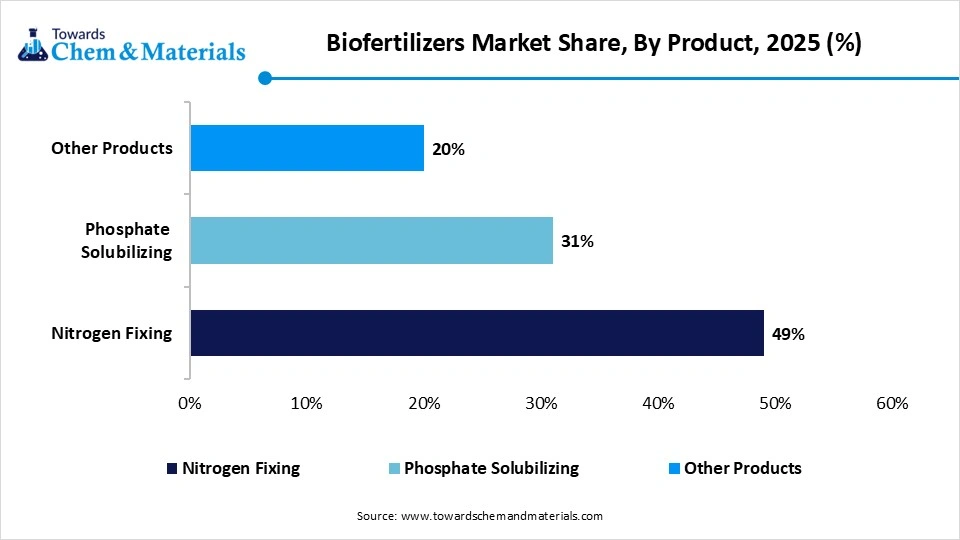
The other products segment held the 20% market share in 2025 and is expected to grow at the fastest CAGR of 14.1% over the forecast period. The specialty biofertilizers are the ones that are gaining momentum as they are finding wide acceptance in specialty crops and high-value horticulture. Mycorrhiza, micronutrient-solubilizing microbes, and advanced microbial blends are used in products that help increase nutrient uptake and crop quality as well as long-term soil productivity. The growing number of commercially operated farming systems is embracing innovative specialty biofertilizers at a rapid pace, with the expansion of precision agriculture and the increasing need for customized biological crop solutions.
Biofertilizers Market Share, By Product, 2025 (%)
| By Product | Revenue Share, 2025 (%) |
| Nitrogen Fixing | 49% |
| Phosphate Solubilizing | 31% |
| Other Products | 20% |
Application Insights
The seed treatment segment dominated the market with the largest share of 38% in 2025, due to the ability to effectively deliver microbes straight to the first point of crop development. This technique is preferred by farmers because it is low-cost, easy to apply, and helps to enhance germination, root growth, and nutrient absorption. Increasingly, large-scale cereal, grain, and pulse cultivation practices around the world are adopting new technologies that promote microbial stability and shelf life.
The foliar spray segment held the 27% market share in 2025 and is expected to grow at the fastest CAGR of 14.3% over the forecast period, because they have the potential to be absorbed by the plants quickly and to result in a quick crop response. Demand for sprays of liquid biofertilizers has been increasing due to the production of high-value fruits, vegetables, and horticulture crops. Furthermore, the precision spraying technology and the use of advanced irrigation systems optimize the use of foliar biofertilizers, reduce losses, and help to increase crop productivity, which makes them more attractive for modern agriculture.
Biofertilizers Market Share, By Application, 2025 (%)
| By Application | Revenue Share, 2025 (%) |
| Seed Treatment | 38% |
| Soil Treatment | 35% |
| Foliar Spray | 27% |
Crop Type Insights
The cereals & grains segment dominated the market with the largest share of 41% in 2025. Biofertilizers are increasingly used by farmers to enhance the productivity of the grains with a cut in the cost of synthetic fertilizers. Governments around the world are also striving to promote sustainable cereal cultivation through various measures in agriculture and the environment. Nitrogen-fixing microbial solutions are especially useful in sustaining the fertility of the soil and enhancing long-term crop yields in economic terms.
The fruits & vegetables segment held the 24% market share in 2025 and is expected to grow at the fastest CAGR of 14.6% over the forecast period, as consumers are increasingly demanding organic and residue-free products. The sustainable nutrient solutions for export-oriented horticulture farming are a growing demand in order to comply with international quality and certification requirements. Microbiological biofertilizers are being used by the growers to enhance the appearance, taste, shelf life, and productivity of their crops. The market is further driving up the market growth with rising investments in protected cultivation and precision horticulture.
Biofertilizers Market Share, By Crop Type, 2025 (%)
| By Crop Type | Revenue Share, 2025 (%) |
| Cereals & Grains | 41% |
| Oilseeds & Pulses | 26% |
| Fruits & Vegetables | 24% |
| Other Crop Types | 9% |
Form Insights
The dry segment dominated the market with the largest share of 57% in 2025, due to the ease of use, lower transportation costs, and more convenient storage. Carrier-based dry formulations are heavily favored by farmers because they are affordability and can be used in conventional farming techniques. Good rural distribution channels and availability of products are also contributing to good adoption, particularly in developing agricultural economies with large scale agriculture operations.
The liquid segment held the 43% market share in 2025 and is expected to grow at the fastest CAGR of 14.8% over the forecast period, as they are viable, fast-acting, and have a longer shelf life. They are compatible with current drip irrigation and fertigation systems and facilitate precision farming. Commercialization and acceptance of liquid microbial formulations are being driven by increased uptake of technologically advanced farming methods and high-performance biological inputs in the world.
Biofertilizers Market Share, By Market, Form, 2025 (%)
| By Market, Form | Revenue Share, 2025 (%) |
| Dry | 57% |
| Liquid | 43% |
Distribution Model Insights
The distributor and dealer networks segment dominated the market with the largest share of 54% in 2025, as it offers adequate market penetration in the rural areas and farmer accessibility. Agrochemical retailers are quickly broadening their product lines of biological products to satisfy escalating demand for sustainable agricultural inputs. Regional dealer networks are equally important for product awareness, technical information, and post-harvest services in emerging agricultural economies that have disjointed farming communities.
The online platforms/e-commerce segment held the 18% market share in 2025 and is expected to grow at the fastest CAGR of 16.1% over the forecast period. Internet access to agricultural inputs is growing, largely due to farmers' growing digital literacy and penetration in the use of smartphones. The use of e-commerce platforms also facilitates easy comparison of products, direct contact with the manufacturers, and access to precision farming recommendations, which helps increase the awareness and dissemination of biofertilizers in rural and semi-urban markets.
Biofertilizers Market Share,By Distribution Model, 2025 (%)
| By Distribution Model | Revenue Share, 2025 (%) |
| Direct Sales (B2B) | 28% |
| Distributor and Dealer Networks | 54% |
| Online Platforms / E-commerce | 18% |
Regional Analysis:
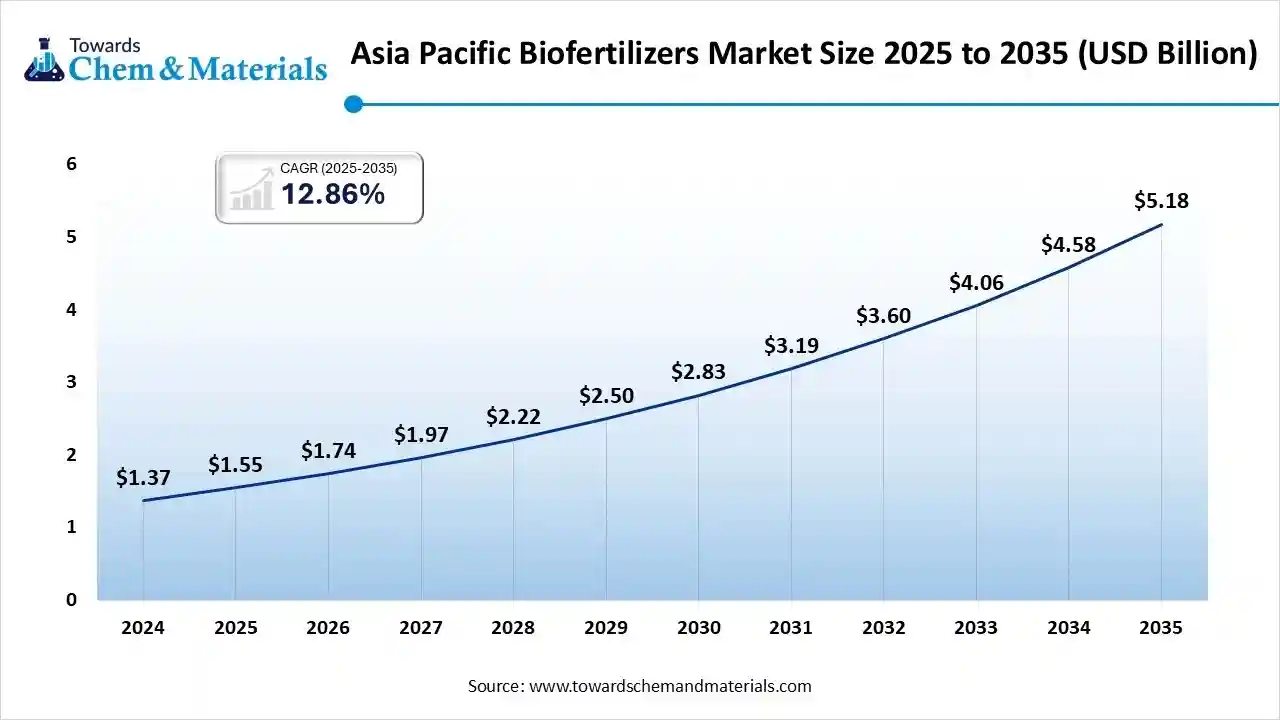
The Asia Pacific biofertilizers market size was estimated at USD 1.52 billion in 2025 and is projected to reach USD 5.17 billion by 2035, growing at a CAGR of 13.02% from 2026 to 2035. Asia Pacific dominated the market by holding 39% share in 2025 and is expected to grow at the fastest with a CAGR of 14.7% during the forecast period. Favorable agricultural activities, growing organic farming practices, and increased government support for sustainable agriculture drive the biofertilizers market in the Asia Pacific. Biological crop nutrition is being rapidly introduced in countries like India and China to enhance soil fertility, lessen the chemical fertilizer dependence, and meet growing food production needs.
China
- The market for biological products that help increase the quality of the soil has been accelerated by large agricultural production.
- R&D investment into microbial formulation development is supported by investments in agricultural biotechnology.
Precision nutrient management practices are reinforced via sustainable farming programmes.
India
- The government favours the cultivation of organic products and the use of environmentally friendly agricultural inputs.
- As more and more farmers want to produce residue-free food, their interest in using biofertilizers grows.
There is a need to expand pulse and cereal cultivation to facilitate the use of nitrogen-fixing microorganisms.
The North America biofertilizers market size was estimated at USD 0.94 billion in 2025 and is projected to reach USD 3.21 billion by 2035, growing at a CAGR of 13.07% from 2026 to 2035. North America held the 24% market share in 2025 and is expected to experience notable growth in the market with 11.60% CAGR during the forecast period, thanks to regenerative agriculture and the increasing preference for organic food products. Microbial inputs are becoming more commonly adopted to enhance soil health and minimise environmental impact. The region's market growth and innovation remain robust, driven by advanced precision farming technologies, robust research infrastructure, and supportive sustainability initiatives.
U.S.
- Bio-fertilizers market growth is also boosted by the implementation of regenerative agriculture.
- National demand for organic food is a stimulus to the adoption of sustainable crop nutrition.
Robust agri research infrastructure drives innovation of microbial products.
Canada
- Sustainability programs put in place by the government encourage sustainable agriculture.
- Biofertilizer consumption grows in the areas of large grain cultivation. Biofertilizer consumption expansion in large grain-cultivated areas.
- Increased awareness of carbon reduction benefits the adoption of biological input.
Europe biofertilizers market size was estimated at USD 0.82 billion in 2025 and is projected to reach USD 2.82 billion by 2035, growing at a CAGR of 13.15% from 2026 to 2035. Europe held the 21% market share in 2025 and is expected to experience notable growth in the market with 11.90% CAGR during the forecast period, as environmental regulations are very strict, and sustainability in agriculture is emphasized. Demand for biological crop inputs is growing with policies that encourage the reduction in chemical fertilizer use and organic farming. The adoption of precision agriculture technologies and soil conservation awareness are other factors driving the growth of the biofertilizer market in European countries.
Germany
- Environmental regulations are strict and limit the use of chemical fertilizers.
- Precision farming technologies promote efficient use of nutrients applied by microorganisms.
- Putting more land under organic cultivation further drives the need for sustainable agricultural inputs.
UK
- Biological products for plant nutrition are promoted by sustainable agriculture policies.
- Residual-free farming practices are gaining more popularity in the wine and horticulture sectors.
- Awareness about Microbial Soil Enhancement through soil conservation efforts.
Biofertilizers Market Share, By Regional, 2025 (%)
| Regional | Revenue Share, 2025 (%) |
| Asia-Pacific | 39% |
| North America | 24% |
| Europe | 21% |
| Latin America | 10% |
| Middle East & Africa | 6% |
The Latin America biofertilizers market size was estimated at USD 0.39 billion in 2025 and is projected to reach USD 1.31 billion by 2035, growing at a CAGR of 12.88% from 2026 to 2035.Latin America held the 10% market share in 2025 and is expected to experience notable growth in the market with 13.10% CAGR during the forecast period. The soybean, sugarcane, and horticulture growth in Latin America is driving the emergence of a high-potential biofertilizer market. Brazil and Argentina are some countries that are turning to sustainable farming techniques to boost export competitiveness and soil productivity. Microbial soil enhancement practices are also promoted on a large scale in agricultural practices regionally.
Brazil
- Increased soybean production leads to increased demand for nitrogen-fixing biofertilizers.
- In the agricultural sector, sustainable farming practices promote agricultural market competitiveness.
- Microbial soil treatments are becoming common practice on large-scale commercial farms.
Argentina
- Adoption of microbial nutrient management practices rises when there is an increase in oilseed and cereal farming.
- More farmers are looking to enhance soil productivity on a sustainable basis.
- Organic and residue-free farming is promoted through the export of agriculture.
The Middle East and Africa biofertilizers market size was estimated at USD 0.23 billion in 2025 and is projected to reach USD 0.79 billion by 2035, growing at a CAGR of 13.13% from 2026 to 2035.The Middle East and Africa held the 6% market share in 2025 and is expected to experience notable growth in the market with 12.40% CAGR during the forecast period, as a result of heightened worries about water scarcity, soil degradation, and food security. Governments are encouraging sustainable agriculture practices to enhance the production of crops in difficult climatic circumstances. Supporting regional market development are the expansion of greenhouse agriculture and controlled environment agriculture, along with increased awareness of biological soil management solutions.
South Africa
- The drought has motivated the adoption of sustainable farming practices.
- Demand for microbial fertilizer is rising due to the rise in greenhouse and horticulture farms.
- An interest in biological soil restoration is increased by challenges to soil degradation.
Saudi Arabia
- Sustainable agriculture is encouraged through the government's food security programs.
- The rise in the demand for the advanced liquid biofertilizers is due to controlled-environment farming.
- Efficient soil nutrient management solutions are promoted by desert farming projects.
Recent Developments
- In March 2026, the Minnesota Department of Agriculture unveiled the Biofertilizer Innovation and Efficiency Pilot Program, aimed at enhancing nitrogen management for farmers, promoting water quality, and soil health. Applications for the 2026 season opened March 2, closing May 1, with $15 per acre available for participants.(Source: www.morningagclips.com)
- In August 2025, BioConsortia, Inc. secured $15 million in funding, led by Otter Capital, marking a total of $95 million from internal investors, reflecting confidence in the company's science and commercial momentum, according to CEO Marcus Meadows-Smith.(Source: www.businesswire.com)
Top Companies in the Market
- Koppert Biological Systems
- Bayer AG
- BASF SE
- Syngenta AG
- Novozymes A/S
- Gowan Group
- Marrone Bio Innovations
- UPL Limited
- SEIPASA S.A.
Segments Covered in the Report
By Product
- Nitrogen Fixing
- Rhizobium
- Azotobacter
- Azospirillum
- Cyanobacteria
- Phosphate Solubilizing
- Bacterial Phosphate Solubilizers
- Fungal Phosphate Solubilizers
- Other Products
- Potash Mobilizing
- Zinc Solubilizing
- Mycorrhiza
- Silicate Solubilizing
By Application
- Seed Treatment
- Seed Coating
- Seed Pelleting
- Soil Treatment
- Basal Soil Application
- Compost Enrichment
- Drip Irrigation Application
- Foliar Spray
- Liquid Foliar Spray
- Nutrient Enriched Foliar Spray
By Crop Type
- Cereals & Grains
- Wheat
- Rice
- Corn
- Barley
- Oilseeds & Pulses
- Soybean
- Groundnut
- Lentils
- Chickpeas
- Fruits & Vegetables
- Leafy Vegetables
- Citrus Fruits
- Tomatoes
- Berries
- Other Crop Types
- Plantation Crops
- Turf & Ornamentals
- Fiber Crops
By Form
- Dry
- Powder
- Granules
- Carrier-Based Formulations
- Liquid
- Suspension Formulations
- Liquid Concentrates
- Fermentation-Based Liquids
By Distribution Model
- Direct Sales (B2B)
- Contract Farming Supply
- Institutional Sales
- Distributor and Dealer Networks
- Agrochemical Dealers
- Regional Distributors
- Retail Agricultural Stores
- Online Platforms / E-commerce
- Company-Owned Platforms
- Third-Party E-commerce Platforms
By Region
- North America
- U.S.
- Canada
- Mexico
- Europe
- Germany
- UK
- France
- Italy
- Spain
- Asia Pacific
- China
- India
- Japan
- South Korea
- Latin America
- Brazil
- Argentina
- Middle East & Africa
- Saudi Arabia
- South Africa
FAQ's
Question 1 : What is the current global biofertilizer market size?
Answer : The global biofertilizer market size is valued at USD 4.41 billion in 2026, up from USD 3.91 billion in 2025. The total market revenue is projected to reach USD 13.10 billion by the year 2035.
Question 2 : Which product type holds the highest market share?
Answer : Nitrogen-fixing biofertilizers hold the highest market share, accounting for 49% of global revenue. These products are widely utilized because they naturally convert atmospheric nitrogen into plant-absorbable nutrients, reducing reliance on synthetic alternatives.
Question 3 : Why is the liquid biofertilizer segment growing so fast?
Answer : Liquid biofertilizers are growing at the fastest rate because they offer a longer shelf life, higher microbial viability, and blend seamlessly with automated drip irrigation and fertigation systems. They eliminate the storage and handling challenges common with traditional dry powder formulas.
Question 4 : Which region is leading the biofertilizer market expansion?
Answer : The Asia-Pacific region leads the market with a 39% share of total revenue. Government subsidies, large agricultural landbanks, and expanding organic certification programs in India and China are accelerating regional adoption.
Question 5 : What are the main drivers of the biofertilizer market?
Answer : The primary drivers are the surging consumer demand for organic and residue-free food, strict environmental regulations against chemical runoff, and government-led soil restoration programs. The integration of AI-driven soil microbiome mapping is also opening fresh opportunities for growth.
Meet the Team

Saurabh Bidwai
Principal Consultant
Saurabh Bidwai, a B.Tech Chemical Engineering graduate with 4+ years of experience, specializes in specialty chemicals, commodity chemicals, and engineered materials, offering valuable insights into market trends and emerging opportunities.

Aditi Shivarkar
Reviewed By
Aditi Shivarkar, with 14+ years in Chemical and Materials market research, specializes in Chemical and Materials. She ensures accurate, actionable insights, driving Towards Chemicals And Materials Analytics and Consulting excellence in industry trends and sustainability.