
Glass Manufacturing Market Size to Hit USD 211.18 Billion by 2034
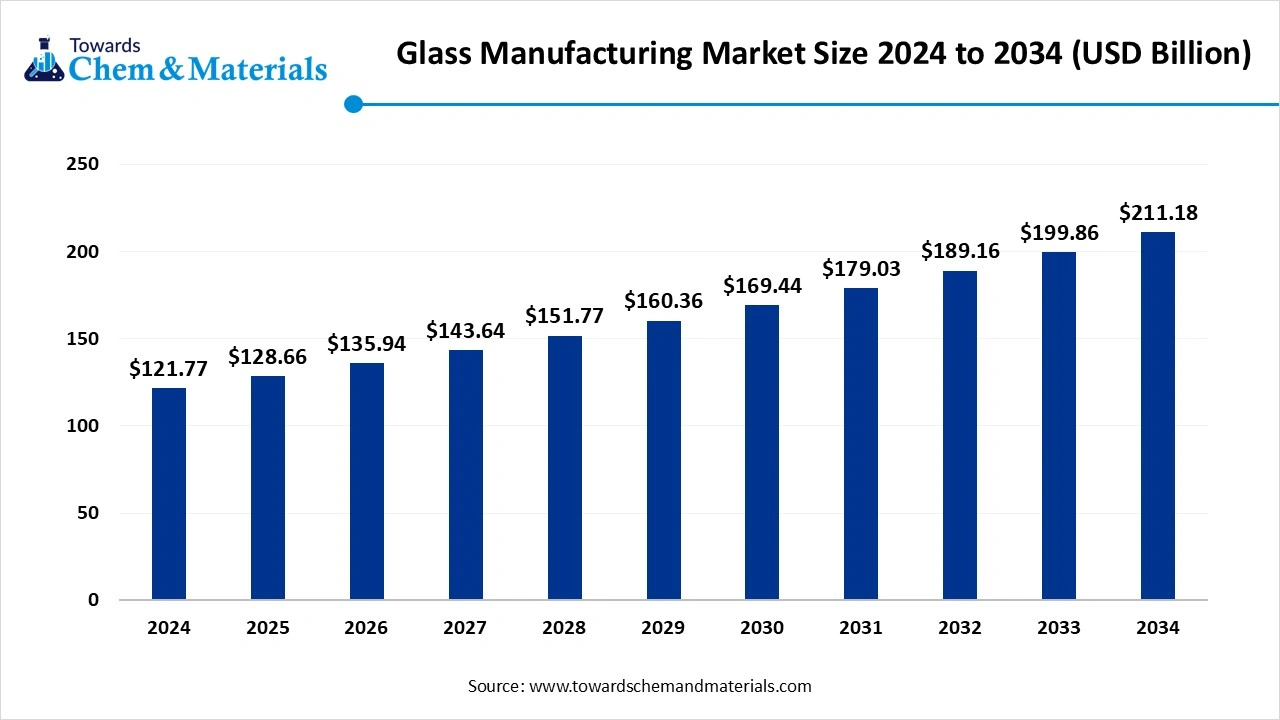
According to the new research report, the global glass manufacturing market size was valued at USD 121.77 billion in 2024, grew to USD 128.66 billion in 2025, and is expected to hit around USD 211.18 billion by 2034, growing at a compound annual growth rate (CAGR) of 5.66% over the forecast period from 2025 to 2034. Asia Pacific dominated the glass manufacturing market with a market share of 50% in 2024.
Content
Glass Manufacturing Market Market Size and Top Companies Analysis, 2034
The global glass manufacturing market size was reached at USD 121.77 billion in 2024 and is expected to be worth around USD 211.18 billion by 2034, growing at a compound annual growth rate (CAGR) of 5.66% over the forecast period 2025 to 2034. The growing glass demand from the automotive and construction sectors is the key factor driving market growth. Also, a rapid surge in global population across the globe, coupled with the government regulations supporting energy-efficient construction, can fuel market growth further.
Key Takeaways
- By region, Asia Pacific dominated the market with approximately 50% share in 2024. The dominance of the segment can be attributed to the surge in disposable incomes and lifestyle shifts, along with the expanding automotive sector.
- By region, the Middle East & Africa is expected to grow at the fastest CAGR over the forecast period. The growth of the region can be credited to the increasing focus on environmental sustainability, which is optimizing low-E coatings.
- By product type, the flat/float glass segment dominated the market with approximately 40% share in 2024. The dominance of the segment can be attributed to the increasing demand for solar energy technologies.
- By product type, the specialty glass segment is expected to grow at the fastest CAGR over the forecast period. The growth of the segment can be credited to the growing specialty glass demand from major industries.
- By raw material, the silica sand segment held approximately 45% market share in 2024. The dominance of the segment can be linked to the enhancements in silica sand extraction technologies that improve product efficiency and quality.
- By raw material, the cullet segment is expected to grow at the fastest CAGR over the forecast period. The growth of the segment can be driven by increasing consumer demand for sustainable products.
- By manufacturing process, the float process segment led the market by holding approximately 55% share in 2024. The dominance of the segment is owed to the rapid innovations in glass technology.
- By manufacturing process, the press & blow process segment is expected to grow at the fastest CAGR over the projected period. The growth of the segment is due to the growing demand for heavy-duty and durable glass containers.
- By application, the building & construction segment dominated the market by holding approximately 35% share in 2024. The dominance of the segment can be attributed to the rapid urbanization and infrastructure development.
- By application, the solar energy segment is expected to grow at the fastest during the study period. The growth of the segment can be credited to the growing investments in solar infrastructure, coupled with the rise in public awareness.
- By end-use industry, the construction & infrastructure segment held approximately 40% market share in 2024. The dominance of the segment can be linked to the rapid shift toward sustainable construction and advancements in glass manufacturing technology.
- By end-use industry, the electronics & IT segment is expected to grow at the fastest CAGR during the projected period. The growth of the segment can be driven by the growing need for high-performance glass in electronic displays and other devices.
Technological Advancements are Expanding Market Growth
The global glass manufacturing market refers to the production of glass and glass-based products used across industries, including construction, automotive, packaging, electronics, and solar energy. Glass is primarily produced through processes such as float glass, container glass, and specialty glass manufacturing, utilizing raw materials like silica sand, soda ash, limestone, and cullet (recycled glass).
Growing demand is driven by rising construction & infrastructure projects, increasing consumption of glass packaging in beverages and pharmaceuticals, the automotive industry's safety & design requirements, and the rapid expansion of solar energy & electronics sectors. Technological advancements in lightweight glass, smart glass, and eco-friendly recycling further support market growth.
What Are the Key Trends Influencing the Global Glass Manufacturing Market?
- The ongoing technological innovations in the market are the major trend fuelling the growth of the market. The development of smart glass, which can adapt to different environmental conditions, is increasingly gaining traction. Also, extensive collaborative initiatives between major market players can optimise technological advancements.
- The growing demand for temperature solutions for glass manufacturing is another trend shaping positive market expansion. The glass production sectors need an accurate temperature control because of the high temperatures required for the entire production process, particularly for container glass.
- The ongoing economic growth and industrialization in countries across the Asia-Pacific have increased huge investments in infrastructure development, creating substantial opportunities in the market. Increasing disposable incomes in these regions also propelled the demand for electronic devices and consumer goods, which require glass.
Report Scope
| Report Attributes | Details |
| Market Size in 2025 | USD 128.66 Billion |
| Expected Size by 2034 | USD 211.18 Billion |
| Growth Rate from 2025 to 2034 | CAGR 5.66% |
| Base Year of Estimation | 2024 |
| Forecast Period | 2025 - 2034 |
| Dominant Region | Asia Pacific |
| Segment Covered | By Product Type, By Raw Material, By Manufacturing Process, By Application, By End-Use Industry, By Region |
| Key Companies Profiled | AGC Inc., Fuyao Glass Industry Group Co. Ltd., Guardian Industries, Saint-Gobain, O-I Glass Inc., AGI glaspac, Nihon Yamaura Glass Co., Ltd., Vitro, 3B- the fiberglass company |
Market Opportunity
The Surge in Sales of Electronic Display Units
The rapid growth in the sales of electronic display units is the major factor creating lucrative opportunities in the market. The market is witnessing substantial growth due to the growing need for glass in various sectors, especially in electronics and construction. Furthermore, the adoption of innovative technologies like artificial intelligence, virtual reality, and 5G is driving demand for electronic devices with high-quality displays.
- In September 2025, Hue Premium Silica Company unveils $30 mln silica industry project. HPS products are rapidly conquering the wide international markets such as Thailand, Malaysia, and Indonesia, and continue to expand into other emerging markets.(Source: https://en.vneconomy.vn)
Market Challenges
High Energy Costs
Glass manufacturing is an energy-intensive process, which requires furnaces that function at very high temperatures (over 1500°C). This makes production costs heavily reliant on fossil fuel prices, which significantly affects the manufacturers' profitability. Moreover, the cost of raw materials like silica sand and soda ash can be unpredictable and depends on market fluctuations, hindering market expansion further.
Regional Insight
Asia Pacific Global Glass Manufacturing Market Trends
The Asia Pacific glass manufacturing market size was estimated at USD 60.89 billion in 2024 and is anticipated to reach USD 106.86 billion by 2034, growing at a CAGR of 5.79% from 2025 to 2034. Asia Pacific dominated the market in 2024.
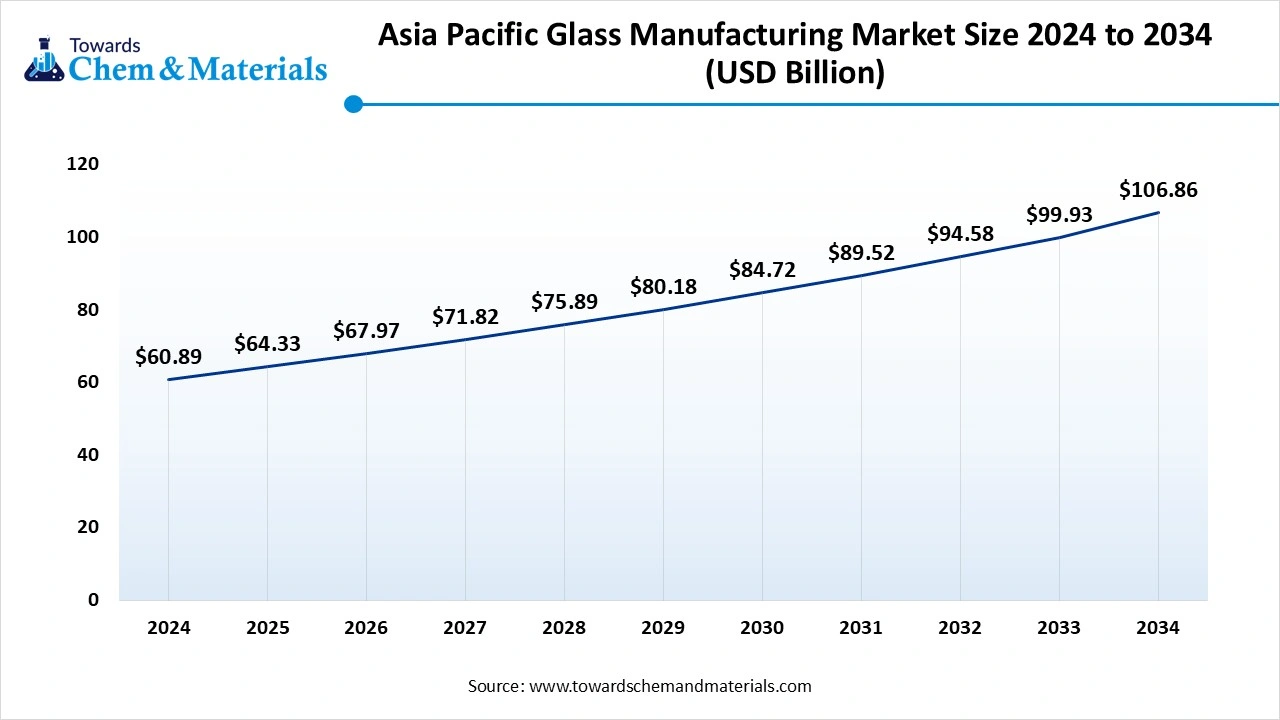
The dominance of the segment can be attributed to the surge in disposable incomes and lifestyle shifts, along with the expanding automotive sector, because of increased production and ownership. In addition, the ongoing urbanization in countries like China and India boosts demand for flat glass in windows, building facades, and interior design.
China Global Glass Manufacturing Market Trends
In the Asia Pacific, China led the market owing to the ongoing urbanization and large-scale construction, coupled with the surge in domestic consumption for electronics, consumer goods, and other home appliances. Also, the adoption of cutting-edge technologies such as smart glass, high-performance glass, and optical fibers for faster data transmission has a positive impact on the country.
Middle East & Africa Global Glass Manufacturing Market Trends
The Middle East & Africa are expected to grow at the fastest CAGR over the forecast period. The growth of the region can be credited to the increasing focus on environmental sustainability, which is optimising low-E coatings, energy-efficient glass, and recyclable packaging. Furthermore, substantial government investment in construction, infrastructure, and renewable energy projects across the region is contributing to market growth in the MEA.
Segmental Insight
Product Type Insight
Which Flat/Float Glass Type Segment Dominated the Global Glass Manufacturing Market in 2024?
The flat/float glass segment dominated the market in 2024. The growth of the segment attributed to the increasing demand for solar energy technologies and growing adoption of energy-efficient building solutions. Additionally, flat glass with enhanced solar control, insulation, and other properties is crucial for fulfilling strict energy efficiency regulations and the construction of green buildings.
The specialty glass segment is expected to grow at the fastest CAGR over the forecast period. The growth of the segment can be credited to the growing specialty glass demand from major industries such as electronics, automotive, and construction, along with the technological innovations in production and materials. Moreover, key players are emphasising developing advanced products with improved properties to meet niche applications across different industries.
Raw Material Insight
Why Silica Sand Segment Dominated the Global Glass Manufacturing Market in 2024?
The silica sand segment held the largest market share in 2024. The dominance of the segment can be linked to the enhancements in silica sand extraction technologies that improve product efficiency and quality. Furthermore, silica sand plays an important role in the oil and gas sector as a proppant in hydraulic fracturing (fracking) operations, promoting the extraction of oil and gas.
The cullet segment is expected to grow at the fastest CAGR over the forecast period. The growth of the segment can be driven by increasing consumer demand for sustainable products and less carbon emissions from utilizing cullet as a feedstock. In addition, cullets are also finding extensive applications in construction materials like countertops and aggregates, which is a major market driver.
Manufacturing Process Insight
How Much Share Did the Float Process Segment Held in 2024?
The float process segment led the market in 2024. The dominance of the segment is owed to the rapid innovations in glass technology, coupled with the surge in automotive and construction demand. The float process is a crucial technique for manufacturing high-grade flat glass, which makes it central to the market's expansion.
The press & blow process segment is expected to grow at the fastest CAGR over the projected period. The growth of the segment is due to the growing demand for heavy-duty and durable glass containers in the pharmaceutical, food, beverage, and chemical industries. Moreover, this process enables good control over a glass distribution, which in turn results in improved container strength.
Application Insight
Which Application Type Segment Dominated the Global Glass Manufacturing Market in 2024?
The building & construction segment dominated the market in 2024. The dominance of the segment can be attributed to the rapid urbanization and infrastructure development, especially in developing countries such as China and India. Additionally, a trend towards heavier and larger glass panels for buildings creates a sense of openness and enables more natural light, boosting demand for construction glass with increased strength.
The solar energy segment expects the fastest growth in the market during the study period. The growth of the segment can be credited to the growing investments in solar infrastructure, coupled with the rise in public awareness and preference for clean energy. Furthermore, advanced technologies make solar glass cheaper and more efficient, which makes solar power more appealing and accessible to more users.
End-Use Industry Insight
Why Did The Construction & Infrastructure Segment Held The Largest Global Glass Manufacturing Market Share In 2024?
The construction & infrastructure segment held the largest market share in 2024. The dominance of the segment can be linked to the rapid shift toward sustainable construction and advancements in glass manufacturing technology. In addition, designers and architects use glass for its versatility in maximizing natural light and creating modern architectural designs, offering flexible interior spaces.
The electronics & IT segment is expected to grow at the fastest CAGR during the projected period. The growth of the segment is attributed by the growing need for high-performance glass in electronic displays, fiber optics, and other innovative applications. Also, glass is increasingly being used in more high-tech applications beyond displays, like in electrical and electronics equipment.
Glass Manufacturing Market -- Value Chain Analysis
- Feedstock Procurement : It is the strategic process of sourcing and getting the necessary raw materials needed to manufacture glass. This also involves securing an authentic supply of recycled glass and minerals from different sources.
- Chemical Synthesis and Processing : It refers to the whole chemical-based manufacturing process, from blending raw materials to the final product that determines the glass's characteristics.
- Packaging and Labelling: It includes the physical container, like the glass itself, and the necessary information attached to it. This stage is important for safeguarding the product by meeting regulations.
- Regulatory Compliance and Safety Monitoring: It encompasses an extensive range of practices and standards that govern the manufacturing process, environmental impact, and worker well-being.
Recent Developments
- In February 2025, Ukraine announced it would build its latest float glass production plant in the Kyiv region by 2028. This will decrease the dependence on foreign suppliers, which can make the domestic market more competitive and resilient further.(Source: www.glassonweb.com)
Glass Manufacturing Market Top Companies
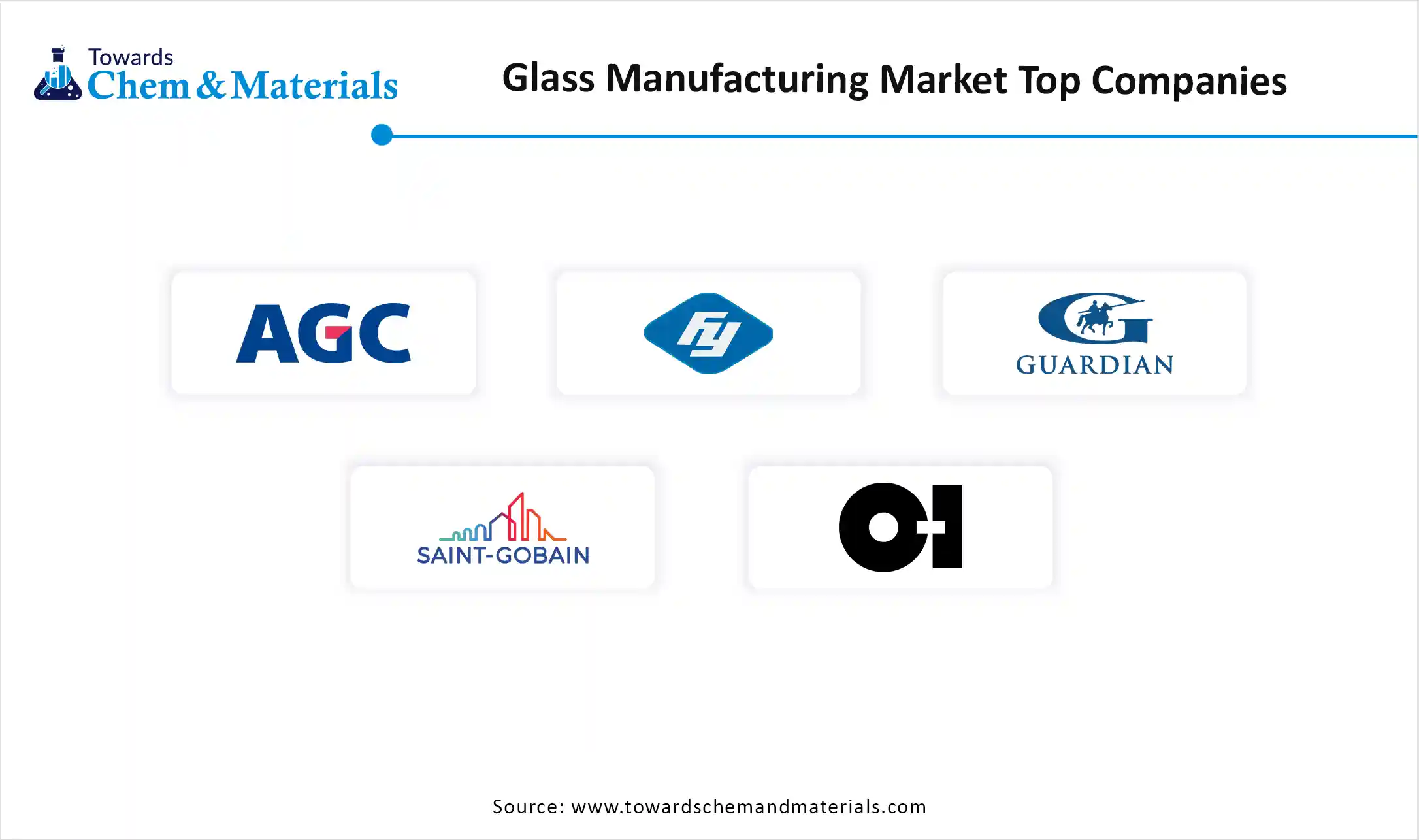
- AGC Inc.
- Fuyao Glass Industry Group Co. Ltd.
- Guardian Industries
- Saint-Gobain
- O-I Glass Inc.
- AGI glaspac
- Nihon Yamaura Glass Co., Ltd.
- Vitro
- 3B- the fiberglass company
Segments Covered
By Product Type
- Flat/Float Glass
- Container Glass (bottles, jars)
- Specialty Glass (borosilicate, aluminosilicate, display glass)
- Fiberglass
- Others (tempered, laminated, coated glass)
By Raw Material
- Silica Sand
- Soda Ash
- Limestone
- Cullet (Recycled Glass)
- Others (alumina, feldspar, dolomite)
By Manufacturing Process
- Float Process
- Blow & Blow Process (container glass)
- Press & Blow Process
- Rolled/Sheet Process
- Others (drawing, casting, specialty methods)
By Application
- Building & Construction (windows, facades, insulation, interior design)
- Packaging (food & beverages, pharmaceuticals, cosmetics)
- Automotive & Transportation (windshields, windows, lighting)
- Electronics & Consumer Goods (displays, screens, appliances)
- Solar Energy (photovoltaic panels, solar thermal)
- Others (aerospace, defense, optical uses)
By End-Use Industry
- Construction & Infrastructure
- Packaging & Consumer Goods
- Automotive
- Electronics & IT
- Energy & Utilities
- Others
By Region
- North America
- U.S.
- Canada
- Europe
- Germany
- UK
- France
- Italy
- Spain
- Sweden
- Denmark
- Norway
- Asia Pacific
- China
- Japan
- India
- South Korea
- Thailand
- Latin America
- Brazil
- Mexico
- Argentina
- Middle East and Africa (MEA)
- South Africa
- UAE
- Saudi Arabia
- Kuwait
FAQ's
Question 1 : What is the current market size of the global glass manufacturing market?
Answer : The global glass manufacturing market size was valued at USD 121.77 billion in 2024 and is projected to reach around USD 211.18 billion by 2034, growing at a compound annual growth rate (CAGR) of 5.66% from 2025 to 2034.
Question 2 : What are the key growth drivers for the global glass manufacturing market?
Answer : The major drivers for the growth of the glass manufacturing market include the increasing demand from the automotive and construction sectors, rising global population, urbanization, advancements in energy-efficient construction technologies, and growing investments in solar energy technologies. Additionally, rising disposable incomes and a shift in lifestyle preferences in emerging markets such as Asia Pacific are significantly contributing to market growth.
Question 3 : What are the market trends in the global glass manufacturing industry?
Answer : Technological Innovations: The development of smart glass and energy-efficient glass solutions, including low-emissivity (Low-E) coatings, is transforming the market. Sustainability Focus: The adoption of eco-friendly glass manufacturing processes and increased use of recycled materials, such as cullet, are boosting market demand. Automation and Smart Manufacturing: Enhanced automation, AI, and IoT integration are improving production efficiency, reducing waste, and supporting market growth. Increased Demand in Solar Energy: Growing investments in solar energy infrastructure, particularly solar glass, are driving demand for specialized glass products.
Question 4 : Which region dominates the global glass manufacturing market?
Answer : Asia Pacific dominated the global glass manufacturing market with a share of approximately 50% in 2024. This dominance is attributed to rapid industrialization, urbanization, and an expanding automotive sector. Additionally, the region\'s rising disposable incomes and increasing demand for consumer goods and electronics further contribute to its market leadership.
Question 5 : What are the key opportunities in the global glass manufacturing market?
Answer : Rising Demand for Electronic Display Units: The growing need for high-quality glass for electronic displays, fiber optics, and other high-tech applications is creating lucrative opportunities in electronics and IT. Expanding Solar Energy Market: As solar energy adoption increases globally, there is a rising demand for solar glass, presenting a significant opportunity for growth. Sustainable Glass Production: Innovations in recycled glass (cullet) usage and energy-efficient glass technologies present new avenues for manufacturers to capitalize on sustainability trends.
Question 6 : Who are the leading companies operating in the global glass manufacturing market?
Answer : AGC Inc., Fuyao Glass Industry Group Co. Ltd., Guardian Industries, Saint-Gobain, O-I Glass Inc., AGI glaspac, Nihon Yamaura Glass Co., Ltd., Vitro, 3B- the fiberglass company
Meet the Team

Saurabh Bidwai
Principal Consultant
Saurabh Bidwai, a B.Tech Chemical Engineering graduate with 4+ years of experience, specializes in specialty chemicals, commodity chemicals, and engineered materials, offering valuable insights into market trends and emerging opportunities.

Aditi Shivarkar
Reviewed By
Aditi Shivarkar, with 14+ years in Chemical and Materials market research, specializes in Chemical and Materials. She ensures accurate, actionable insights, driving Towards Chemicals And Materials Analytics and Consulting excellence in industry trends and sustainability.