
Lubricant Additives Market Size, Sales Volume, Production Efficiency, Export & Import Metrics, Adoption Rates, Recycling Rate, Pricing Trends, Market Positioning, and Customer Experience
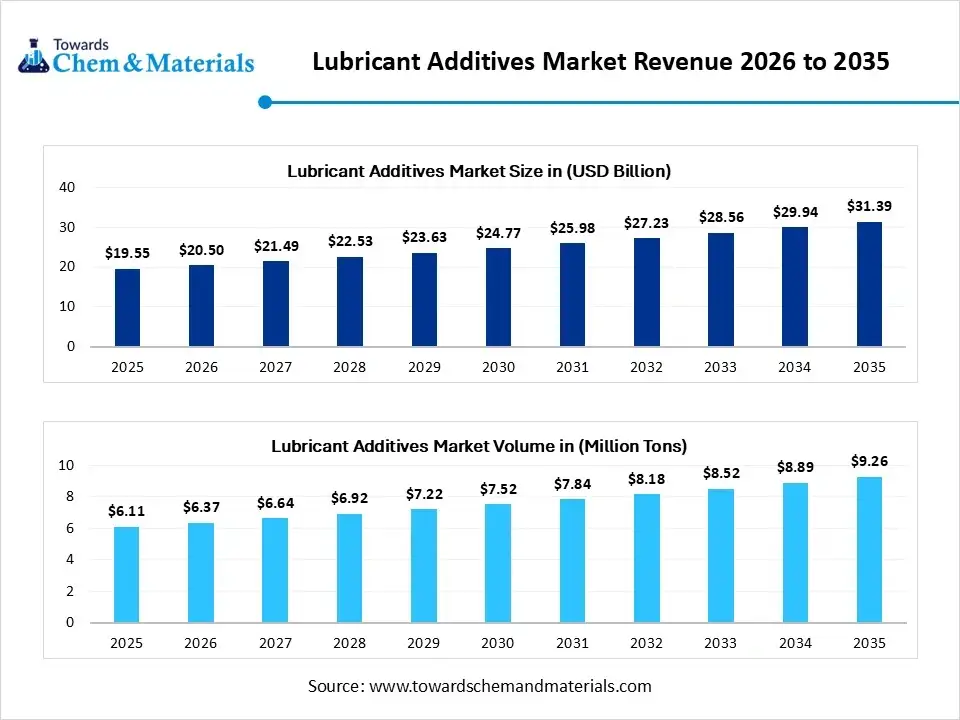
The global Lubricant Additives market, estimated at USD 19.55 billion in 2025, is projected to reach USD 31.39 billion by 2035, growing at a CAGR of 4.85%. The market volume is expected to increase from 6.11 million tons in 2025 to 9.26 million tons by 2035, growing at a CAGR of 4.25%. Asia Pacific dominates the market with a 36% share in 2025 and is expected to grow at a CAGR of 5.90%. The automotive lubricants segment leads the market with 49% market share, while dispersants, mineral oils, and performance enhancement additives also contribute significantly. The market is driven by rising vehicle production, industrialization, advancements in additive technology, and an increased focus on eco-friendly, low-viscosity formulations to improve energy efficiency.
Content
Lubricant Additives Market Trends, Growth and Market Size and Volume Analysis
The global Lubricant Additives market size was estimated at USD 19.55 billion in 2025 and is expected to be worth around USD 31.39 billion by 2035, growing at a CAGR of 4.85% from 2026 to 2035. In terms of volume, the Lubricant Additives market is projected to grow from 6.11 million tons in 2025 to 9.26 million tons by 2035. growing at a CAGR of 4.25% from 2026 to 2035.The growing vehicle production, rapid industrialization, and advancements in additive technology drive the growth of the market.
Market Highlights
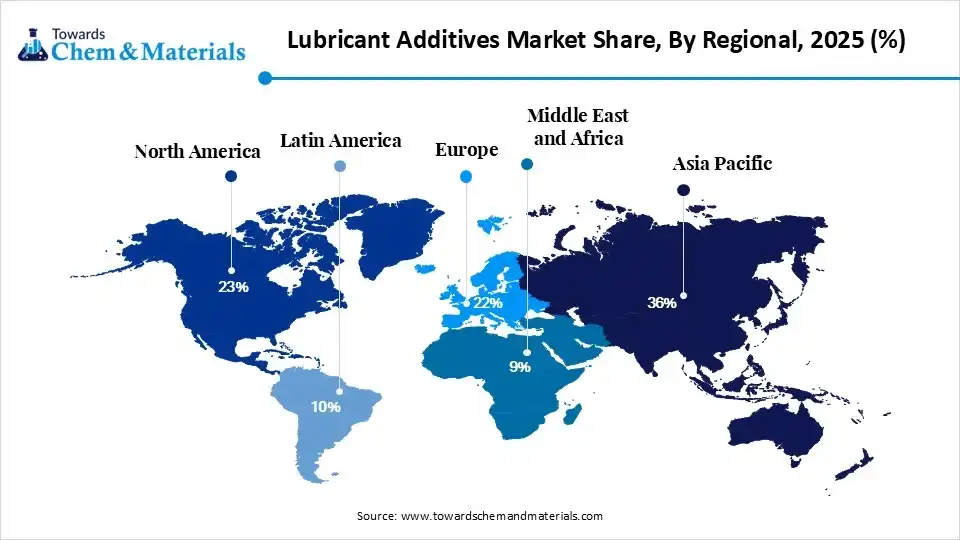
- By region, Asia Pacific dominated the lubricant additives market by holding a 36% share in 2025 and is expected to grow at the fastest with a CAGR of 5.90% during the forecast period,
- By region, North America held the 23% market share in 2025 and expects notable growth in the market with 4.20% CAGR during the forecast period.
- By additive type, the dispersants segment dominated the market with the largest share of 24% in 2025
- By additive type, the anti-wear agents segment held 15% market share in 2025 and is expected to grow at the fastest CAGR of 5.30% over the forecast period.
- By application, the automotive lubricants segment dominated the market with the largest share of 49% in 2025
- By application, the industrial lubricants segment held 32% market share in 2025 and is expected to grow at the fastest CAGR of 5.20% over the forecast period.
- By base oil type, the mineral oil segment dominated the market with the largest share of 57% in 2025
- By base oil type, the synthetic oil segment held 31% market share in 2025 and is expected to grow at the fastest CAGR of 5.60% over the forecast period.
- By end-use industry, the automotive segment dominated the market with the largest share of 46% in 2025
- By end-use industry, the industrial manufacturing segment held 27% market share in 2025 and is expected to grow at the fastest CAGR of 5.30% over the forecast period.
- By function, the performance enhancement segment dominated the market with the largest share of 34% in 2025
- By function, the fuel efficiency improvement segment held 17% market share in 2025 and is expected to grow at the fastest CAGR of 5.40% over the forecast period.
- By distribution channel, the direct sales segment dominated the market with the largest share of 58% in 2025
- By distribution channel, the online sales segment held 12% market share in 2025 and is expected to grow at the fastest CAGR of 5.80% over the forecast period.
Lubricant Additives Market Size and Forecast
- Market Estimated Size (2025): USD 19.55 Billion | CAGR (2026–2035): 4.85%
- Market Projected Size (2035): USD 31.39 Billion
- Market Volume (2025): 6.11 Million Tons | Volume CAGR (2026–2035): 4.25%
- Market Projected Volume (2035): 9.26 Million Tons
- Market Pricing (2025):
- Average Manufacturing Price: USD 3.25 per kg
- Average Selling Price: USD 6.15 per kg
- Pricing CAGR (2025–2035): 2.12%
Market Overview
Lubricant additives function as performance enhancers and improve the longevity of base oils. The stringent regulatory compliance and broader corporate commitments to sustainable sourcing and a carbon-neutral ecosystem are encouraging manufacturers to adopt bio-derived additives. The growing focus on low-viscosity formulations to enhance energy efficiency drives demand for lubricant additives.
In the high-value chemical industry, especially in electrified mobility to meet stringent emission standards and boost fuel economy. The emphasis on ensuring technological innovation that focuses on lubricant additive compatibility and protection in polymeric seals and copper sensors is fueling the market expansion.
Recent Market Trends
- Rising Adoption of Specialized Additives: The shift towards advanced antioxidants and shear-stable polymers enables the adoption of ultra-low viscosity grades that driving the market growth.
- Environmentally Acceptable Lubricants (EALs): These lubricants act as eco-friendly alternatives to meet EPA and Blue Economy mandates, while preventing ecological damage from leaks and offering seal compatibility.
Report Scope
| Report Attribute | Details |
| Market Size and Volume in 2026 | USD 20.50 Billion / 6.37 Million Tons |
| Revenue Size and Volume Forecast in 2035 | USD 31.39 Billion / 9.26 Million Tons |
| Growth Rate | CAGR 4.85% |
| Forecast Period | 2026 - 2035 |
| Base Year | 2025 |
| Dominant Region | Asia Pacific |
| Segment Covered | By Additive Type, By Application, By Base Oil Type, By End-Use Industry, By Function, By Distribution Channel, By Regions |
| Key companies profiled | Afton Chemical Corp., BASF SE, BRB International B.V., Chevron Oronite Company LLC, Daelim Co. Ltd., Deutsche Ölfabrik Gesellschaft Fur Chemische Erzeugnisse M.B.H. & Co. Kg, Dorf-Ketal Chemicals India Pvt. Ltd., Dover Chemical Corp., The Elco Corp. (Italmatch Chemicals S.p.A.), Eni S.p.A., Evonik Industries AG, Infinium International Ltd., Jinzhou Kangtai Lubricant Additives Co. Ltd., King Industries, Inc., LANXESS AG, Lehmann & Voss & Co. KG., Lubrizol Corp., Metall-Chemie GmbH & Co. KG, Xinxiang Richful Lube Additive Co. Ltd., RT Vanderbilt Holding Company, Inc. |
Key Technological Shifts and AI in the Lubricant Additives Market
The lubricant additives market is transforming into a digital resolution. The integration of AI and IoT is converting basic lubricants into liquid sensors by allowing real-time monitoring. The AI-driven techniques offer molecular integrity and prevent contamination of lubricant through predictive maintenance systems. The employment of machine learning for precise and quality-driven lubrication boosts the integration of additives in the manufacturing process.
Technological shift boosts innovation by simulating additive combinations, fabricating specially tailored synthetic additives for an autonomous framework. This shift from reactive to proactive maintenance enhances lubricant infrastructure longevity and reduces environmental waste, driving the market towards technological advancement.
Supply Chain Analysis of the Lubricant Additives Market
- Feedstock Procurement: The sourcing and procurement of mineral oils, phosphorous, synthetic base oils, and specialized chemical additives with molecular stability and environmental standards.
- Key Players: ExxonMobil, Albemarle, Sinopec, Neste, Shell plc., Lubrizol, and BASF SE
- Chemical Processing and Additive Manufacturing: The stage of refining raw materials into base oils and functional compounds with additives to produce finished lubricants through high-precision blending of detergents, viscosity modifiers, and dispersants.
- Key Players: TotalEnergies, Chevron Oronite, ENEOS, Infineum, JX Nippon, Lubrizol, and Afton Chemical
- Distribution and End-Use: The distribution of finished additive packages through direct supply networks or digital procurement platforms to blenders and commercial products with continuous lubrication for end-use.
- Key Players: Maersk, TotalEnergies, BP Castrol, Valvoline, Toyota, Ford, and Caterpillar
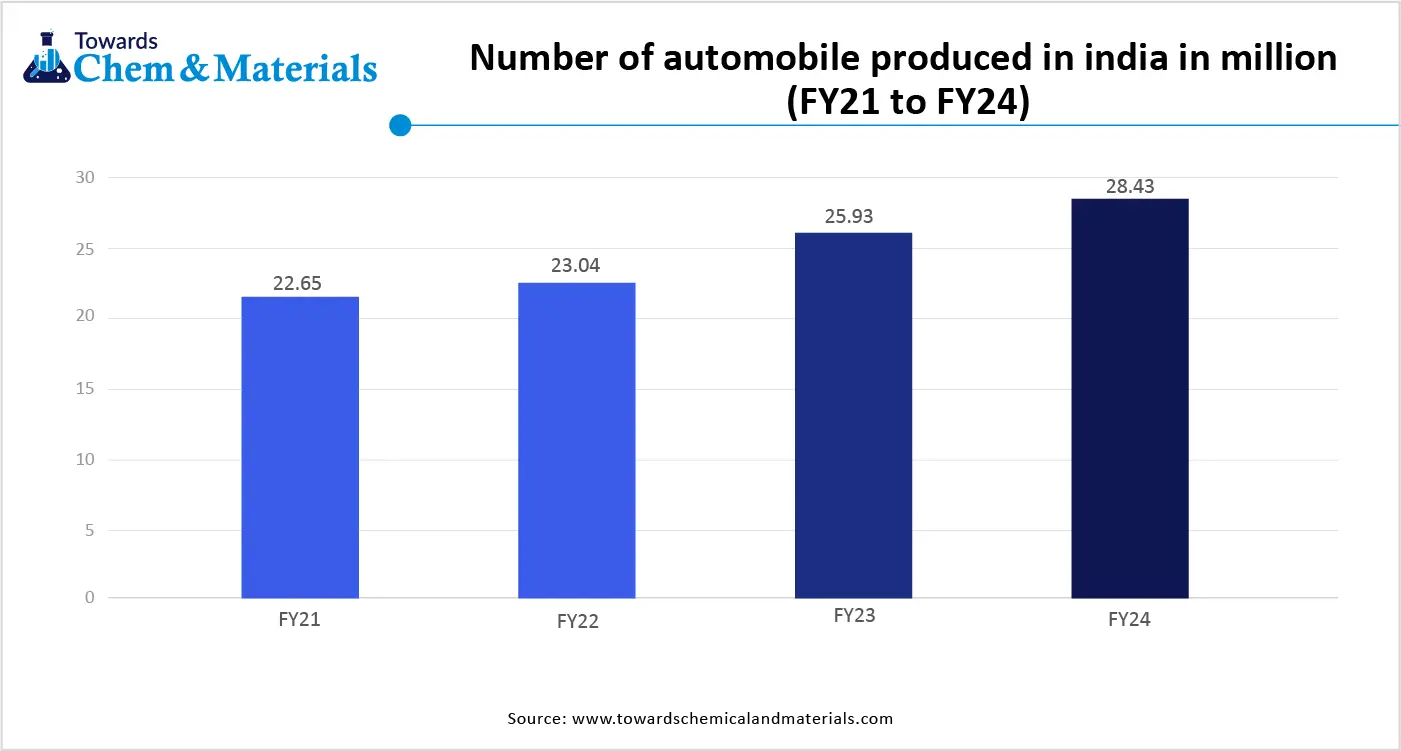
Regulatory Framework: Lubricant Additives Market
| Key Region | Key Regulation | Regulatory Focus |
| North America | EPA 2027/ PC-12 Standards | Standard focus on shift towards low-SAPS additives to after-treatment protection |
| European Union | REACH/ Euro 7 | Phasing out hazardous antioxidants and friction modifiers in the lubrication practices by implementing biodegradable and non-toxic alternatives. |
| Asia Pacific | JASO GLV-1 and China VI-b | Mandating advanced dispersants for soot & deposit control. Standard for specialized friction modifiers in thin 0W-8 and 0W-1 oils. |
| Global | ILSAC GF-7 | Focusing on pre-ignition and requiring a specific calcium and magnesium detergent ratio in downsized engines. |
Lubricant Additives Market Dynamics
Driver
Focus on Green Additives and Nano-Additive Integration
The emerging shift towards bio-based esters and biodegradable dispersants aligns with sustainability, driving this trend. Additionally, by integrating nano-diamond friction modifiers and nano-additive make them key for mainstream industrial lubricants to achieve net-zero targets.
Restraints
Supply Chain Unpredictability
The lubricant additives market is highly sensitive to the cost of phosphorus and molybdenum, that creating geopolitical shipping disruption, restraining the expansion of additive packaging by leading to unpredictable price spikes.
Opportunity
Growing Focus on E-Fluids
The transition towards E-mobility creates a key opportunity for high-margin specialty additives. These e-fluids offer superior electrical conductivity, excellent thermal management, and copper corrosion shielding for the high-speed e- motors.
Segmental Insights
Additive Type Insights
The Dispersants Segment Dominated the Lubricant Additives Market with 24% of Market Share in 2025
The dispersants segment dominated the market with the largest share of 24% in 2025, because it offers viscosity stability and avoids agglomeration in heavy-duty engines. Dispersants are high-volume additives due to their shielding against sludge formation, soot thickening, and engine deposits. The shift towards high-performance ashless dispersants and regulatory compliance for extended oil drain intervals aligns with sustainability make them key for industrial platforms.
The detergents segment held the 18% market share in 2025, due to it neutralize corrosive acids and prevent high-temperature deposit formation. Detergents are alkaline additives that offer mechanical longevity by preserving piston cleanliness in heavy-duty logistics. The shift towards low-ash and calcium-free formulation to avoid pre-ignition is driving the growth.
The anti-wear agents segment held the 15% market share in 2025 and is expected to grow at the fastest CAGR of 5.30% over the forecast period. It is a crucial protective layer in lubricant formulation, producing a protective boundary film that prevents surface damage during high-pressure metal contact. Anti-wear agents offer hardware reliability in heavy-duty drivetrains and industrial gearboxes. The demand for downsized engines is driving the transition towards ashless formulation to prevent toxicity in emission control systems.
The viscosity index improvers segment held 14% market share in 2025. It represent as high-performance polymers that optimize fluid thickness of all-weather lubrication for cold startups and high-heat operations. The demand for shear-stable additives and enhanced fuel efficiency is boosting the shift towards synthetic lubricants and ultra-low viscosity fluids.
Application Insights
The Automotive Lubricants Segment Dominated the Lubricant Additives Market with 49% of Market Share in 2025
The automotive lubricants segment dominated the market with the largest share of 49% in 2025, driven by its massive consumer base to service passenger and commercial fleets. The shift to resource-conserving lubricants to improve energy efficiency by adopting high-tier synthetics and advanced chemical package technologies. The automotive sector focuses on specialized e-fluids that offer copper shielding and thermal management to meet emission standards in modern vehicles.
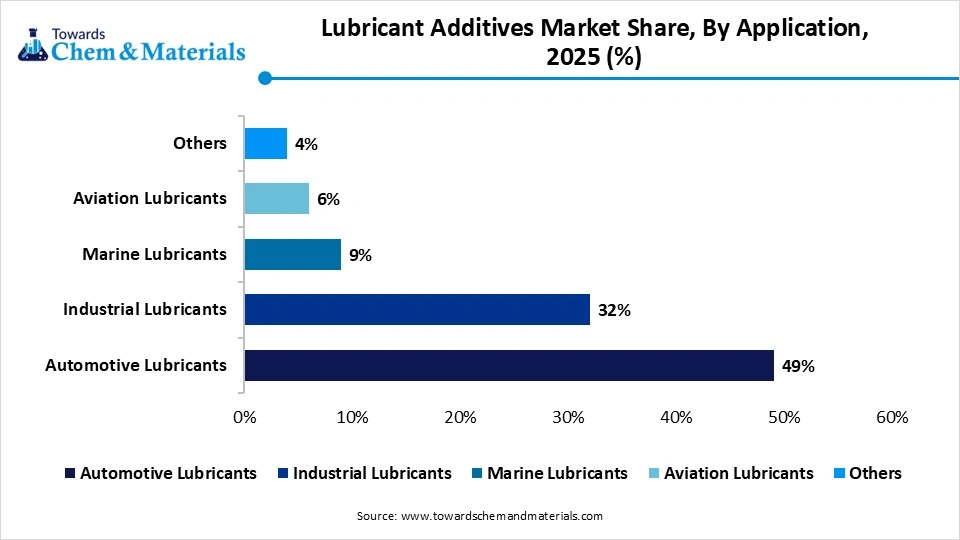
The industrial lubricants segment held the 32% market share in 2025 and is expected to grow at the fastest CAGR of 5.20% over the forecast period. Industry focus on improving operational uptime and dependence on specialized additives for gear lubricants, hydraulic oil, and metalworking fluids. The transition towards industrial automation and biodegradable formulation to meet safety and high-performance standards is bolstering the growth.
The marine lubricants segment held the 9% market share in 2025, due to vast consumption of alkaline detergents and acid neutralizers that protect the marine ecosystem and large-scale engines from high-sulfur fuel byproducts. As the marine sector is transforming towards decarbonization, driving the adoption of biodegradable fluids and alternative fuel systems to withstand heavy mechanical loads.
The aviation lubricants segment held 6% market share in 2025, fueled by its precision-driven thermal stability and demand for safety certification. The aviation sector needs specialized synthetic esters, fire-resistant fluids, and antioxidants in jet turbines and high-altitude flight. The innovation in aviation lubricants focuses on extending component life and promoting emerging hybrid-electric propulsion.
Base Oil Type Insights
The Mineral Oil Segment Dominated the Lubricant Additives Market with 57% of Market Share in 2025
The mineral oil segment dominated the market with the largest share of 57% in 2025, serving as a key for heavy-duty automotive and high-volume industrial machinery by offering cost-effectiveness, superior oxidation resistance, and mechanical compatibility. The rising focus on improving refining purity and viscosity resilience, where mineral oil support extends drain intervals for modern engines.
The synthetic oil segment held the 31% market share in 2025 and is expected to grow at the fastest CAGR of 5.60% over the forecast period. It offers key molecular engineering and superior oxidative resistance by maintaining higher film strength. Synthetic oil is an enabler of technological premiumization that enables the automotive and aerospace transition. The shift towards decarbonization is boosting the advancement of re-refined and bio-based synthetic oil to meet stringent corporate sustainability goals.
The bio-based oil segment held the 12% market share in 2025. It is a key driver for the adoption of environmentally acceptable lubricants. The transition towards green chemistry makes bio-based oil a key component for industrial use by offering superior lubricity, higher flash points, and oxidative stability. The regulatory compliance and sustainable investment in R&D that focus on non-food crop feedstock driving its adoption.
End-Use Industry Insights
The Automotive Segment Dominated the Lubricant Additives Market with 46% of Market Share in 2025
The automotive segment dominated the market with the largest share of 46% in 2025, due to high-volume OEM consumption of crankcase lubricants to meet performance standards. The automotive industry utilized detergent chemistry and friction modifiers to improve fuel efficiency. The move towards multi-functional e-fluids and electric mobility makes lubricant additives key for hybrid and electric drivetrains to meet emission targets.
The industrial manufacturing segment held the 27% market share in 2025 and is expected to grow at the fastest CAGR of 5.30% over the forecast period. Lubricant additives are operationally viable solutions for extreme-pressure agents and corrosion inhibitors essential for precision equipment and high-torque machinery. The rising focus on smart manufacturing, driving demand for premium synthetic lubricants align with automated systems.
The marine segment held the 9% market share in 2025. It is characterized by its demand in large-scale propulsion systems to neutralize corrosive acids. The transition towards environmentally acceptable lubricants to meet stringent maritime pollution standards is boosting the expansion. Innovation in the marine industry focuses on high-performance additive packaging with alternative fuels to maintain decarbonization.
The aerospace segment held 7% market share in 2025, serving as a key technological pillar for flight safety and component durability. The aerospace industry is dependent on advanced antioxidants and metal deactivators in hydraulic actuators and mission-critical hardware. Additionally, the focus on decarbonization and sustainable aviation fuels is fostering growth.
The energy segment held 7% market share in 2025, driven by surging demand for carbon reduction and better fuel efficiency. Modern power generation infrastructure emphasizes high-performance lubricants to reduce friction and extend shelf life. The shift toward renewable energy and advanced synthetics to meet energy-related regulatory requirements is accelerating growth.
Function Insights
The Performance Enhancement Segment Dominated the Lubricant Additives Market with 34% of Market Share in 2025
The performance enhancement segment dominated the market with the largest share of 34% in 2025, offering fluid stability and creating sacrificial protective layers by integrating viscosity index improvers and friction modifiers. Performance enhancer is the key driver of modern fuel economy and emission reduction ecosystem by meeting OEM performance standards. It transforms lubricant into high-performance fluids for industrial and heavy-duty machinery.
The contamination control segment held the 23% market share in 2025. It is designed to neutralize harmful chemicals and byproducts by utilizing high-performance dispersants and detergents. It is a key driver of modern lubricants that also neutralizes combustion acids and moisture ingress. This function maintains extended service intervals and scrubs carbon deposits to protect high-precision machinery from corrosive wear.
The fuel efficiency improvement segment held the 17% market share in 2025 and is expected to grow at the fastest CAGR of 5.40% over the forecast period. This function is a combination of organic friction modifiers and gear-stable polymers that enhance power output and engine safety on ultra-thin, low-viscosity oils. Fuel efficiency improvement is a key catalyst for manufacturers to meet CO2 emission standards and increase fleet mileage.
The viscosity modification segment held 18% market share in 2025, driven by its ability to optimize fluid flow, which makes it essential for maintaining stable protective film. This segment utilizes viscosity index improvers to ensure fluid movement, that make them a key pillar of modern multi-grade oils by lowering energy-sapping drag.
Distribution Channel Insights
The Direct Sales Segment Dominated the Lubricant Additives Market with 58% of Market Share in 2025
The direct sales segment dominated the market with the largest share of 58% in 2025. It is a large-scale, high-value distribution channel between chemical manufacturers and Tier 1oil blenders. By providing direct lines to end-users, manufacturers enable stable pricing and long-term supply collaboration for the R&D of next-generation fluids to meet regulatory compliance and standardized performance.
The online sales segment held the 12% market share in 2025 and is expected to grow at the fastest CAGR of 5.80% over the forecast period. This channel serves as a digital platform that offer streamlined procurement path for specialty blenders and industrial manufacturers. Online sales accelerate transparent pricing and real-time tracking that allow buyers to source high-performance lubricant additives. The surge for the integration of the e-commerce platform enables small-batch and high-tech additive access.
The distributors segment held the 30% market share in 2025. It bridging gap between chemical manufacturers and medium-scale blenders. Distributors offer domestic warehousing and expert supply chain management in localized markets. This channel offers technical resilience and bulk-breaking services by ensuring fast delivery of direct factory sales.
Regional Insights
How Did the Asia Pacific Dominated the Lubricant Additives Market in 2025
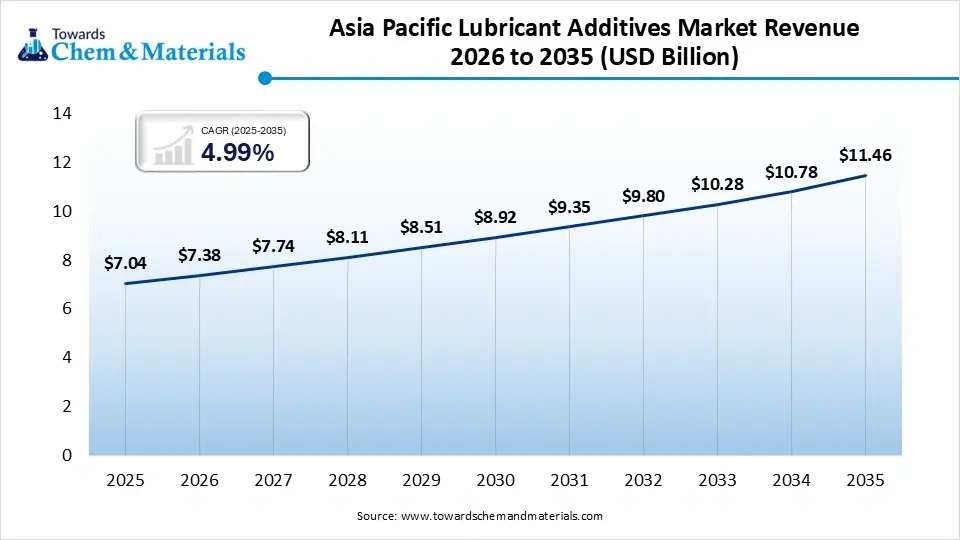
Asia Pacific dominated the market by holding 36% share in 2025 and is expected to grow at the fastest with a CAGR of 5.90% during the forecast period. The region is a key hub for large-scale manufacturing and industrialization. Asia Pacific transition towards synthetic additives and fuel-efficacy low-viscosity fluids to meet stringent regulatory standards. Additionally, the region focuses on advancing contamination control that supports domestic expansion.
China Lubricant Additives Market Growth Trends
China market represents a key for vast consumers of additives and the exporting of lubricants. The rapid electric vehicle shift in the region focuses on synthetic chemistries to meet domestic regulatory compliance. The local players maintain their leadership in the next generation of high-efficiency industrial and hybrid fluids.
North America Lubricant Additives Market Growth Trends
North America held the 23% market share in 2025 and is expected to experience notable growth in the market with a 4.20% CAGR during the forecast period, due to its premium shear-stable polymers and advanced friction reducers. The regional expansion is driven by its stringent CAFÉ fuel economy standards and domestic shift towards ultra-low-viscosity synthetics. Additionally, North America is dominant in zero-emission-compliant chemistries that make them key innovation hub for commercial fleets.
U.S. Lubricant Additives Market Growth Trends
The United States is experiencing significant growth in the market, fueled by its stringent EPA regulations and its shift towards e-fluid additives and specialized chemistries. The domestic giants focus on operational efficiency and longevity of modern industrial sector.
Recent Developments
- In February 2026, Infineum launched its new Volkswagen (VW) SAE 0W-20 product. Marketed as Infineum P6188, an additive technology approved against the latest VW 50800 / 50900 specifications.(Source: www.infineum.com)
- In June 2025, UE Systems and Perma USA announced a partnership and introduced the UltraTrak VARIO, a lubrication technology equipped with ultrasonic sensors. The technology allows real-time monitoring, equipment reliability, and automated maintenance.(Source: www.uesystems.com)
Top Companies List
- Afton Chemical Corp.
- BASF SE
- BRB International B.V.
- Chevron Oronite Company LLC
- Daelim Co. Ltd.
- Deutsche Ölfabrik Gesellschaft Fur Chemische Erzeugnisse M.B.H. & Co. Kg
- Dorf-Ketal Chemicals India Pvt. Ltd.
- Dover Chemical Corp.
- The Elco Corp. (Italmatch Chemicals S.p.A.)
- Eni S.p.A.
- Evonik Industries AG
- Infinium International Ltd.
- Jinzhou Kangtai Lubricant Additives Co. Ltd.
- King Industries, Inc.
- LANXESS AG
- Lehmann & Voss & Co. KG.
- Lubrizol Corp.
- Metall-Chemie GmbH & Co. KG
- Xinxiang Richful Lube Additive Co. Ltd.
- RT Vanderbilt Holding Company, Inc.
Segments Covered
By Additive Type
- Dispersants
- Ashless Dispersants
- Polyisobutylene Succinimides (PIBSI)
- Detergents
- Metallic Detergents
- Calcium-based
- Magnesium-based
- Ashless Detergents
- Metallic Detergents
- Anti-wear Agents
- Zinc Dialkyldithiophosphate (ZDDP)
- Phosphorous-based Additives
- Viscosity Index Improvers
- Olefin Copolymers (OCP)
- Polymethacrylates (PMA)
- Antioxidants
- Aminic Antioxidants
- Phenolic Antioxidants
- Friction modifiers
- Corrosion Inhibitors
- Others
By Application
- Automotive Lubricants
- Engine Oils
- Passenger Car Motor Oil (PCMO)
- Heavy-Duty Motor Oil (HDMO)
- Transmission Fluids
- Gear Oils
- Engine Oils
- Industrial Lubricants
- Hydraulic Fluids
- Metalworking Fluids
- Compressor Oils
- Turbine Oils
- Marine Lubricants
- Aviation Lubricants
- Other
By Base Oil Type
- Mineral Oil
- Synthetic Oil
- PAO (Polyalphaolefins)
- Esters
- Bio-based Oil
By End-Use Industry
- Automotive
- Industrial manufacturing
- Marine
- Aerospace
- Energy (Oil & Gas, Power Generation)
- Others
By Function
- Performance Enhancement
- Wear Protection
- Oxidation Stability
- Contamination Control
- Deposit Control
- Sludge Prevention
- Viscosity Modification
- Fuel Efficiency Improvement
- Others
By Distribution Channel
- Direct Sales (OEM & Large Buyers)
- Distributors
- Online Sales
FAQ's
Question 1 : What is the projected market size and growth rate for the Lubricant Additives industry through 2035?
Answer : The global Lubricant Additives market is projected to reach a value of USD 31.39 billion by 2035, growing at a CAGR of 4.85% from its 2026 estimate of USD 20.50 billion, with a forecasted volume of 9.26 million tons.
Question 2 : Which additive types and applications currently dominate the Lubricant Additives market?
Answer : The dispersants segment holds the largest market share at 24%, while the automotive lubricants application remains the dominant sector with a 49% share, driven by a massive consumer base for passenger and commercial vehicle fleets.
Question 3 : Who are the key players and manufacturers leading the Lubricant Additives market?
Answer : The global market is led by major chemical and energy companies including Afton Chemical Corp., BASF SE, Chevron Oronite, Lubrizol Corp., and Infineum International Ltd., along with specialized players like Evonik Industries AG and LANXESS AG.
Question 4 : What exactly do lubricant additives do?
Answer : They are chemical compounds that enhance the beneficial properties of base oil while suppressing undesirable ones. They prevent corrosion, reduce friction, clean engine deposits, and ensure the oil stays at the right thickness across different temperatures.
Question 5 : How is AI changing the lubricant market?
Answer : AI is being used to simulate millions of additive combinations to create bespoke lubricants for specific engines. Additionally, when combined with IoT sensors, additives can now help predict when a machine will fail by monitoring the chemical integrity of the fluid in real-time.
Question 6 : Are bio-based lubricants as effective as synthetic ones?
Answer : Modern bio-based esters have been engineered to offer excellent lubricity and high flash points. While they were once niche, they are now highly effective for industrial and marine use where environmental safety is a priority.
Meet the Team

Saurabh Bidwai
Principal Consultant
Saurabh Bidwai, a B.Tech Chemical Engineering graduate with 4+ years of experience, specializes in specialty chemicals, commodity chemicals, and engineered materials, offering valuable insights into market trends and emerging opportunities.

Aditi Shivarkar
Reviewed By
Aditi Shivarkar, with 14+ years in Chemical and Materials market research, specializes in Chemical and Materials. She ensures accurate, actionable insights, driving Towards Chemicals And Materials Analytics and Consulting excellence in industry trends and sustainability.