
Magnetic Materials Market Size, Share, Growth, Report 2026 to 2035
The global magnetic materials market size is expected to grow from USD 37.64 billion in 2026 to USD 62.47 billion in 2035, growing at a CAGR of 5.79% from 2026 to 2035. The top Key Players Daido Steel Co. Ltd., Arnold Magnetic Technologies Corporation, Electron Energy Corporation, Tengam Engineering, Inc., Hitachi Metals Ltd., TDK Corp,Shin-Etsu Chemical Co. Ltd., Molycorp Magnequench, Lynas Corporation Ltd.
Content
What is the Current Magnetic Materials Market Size and Share?
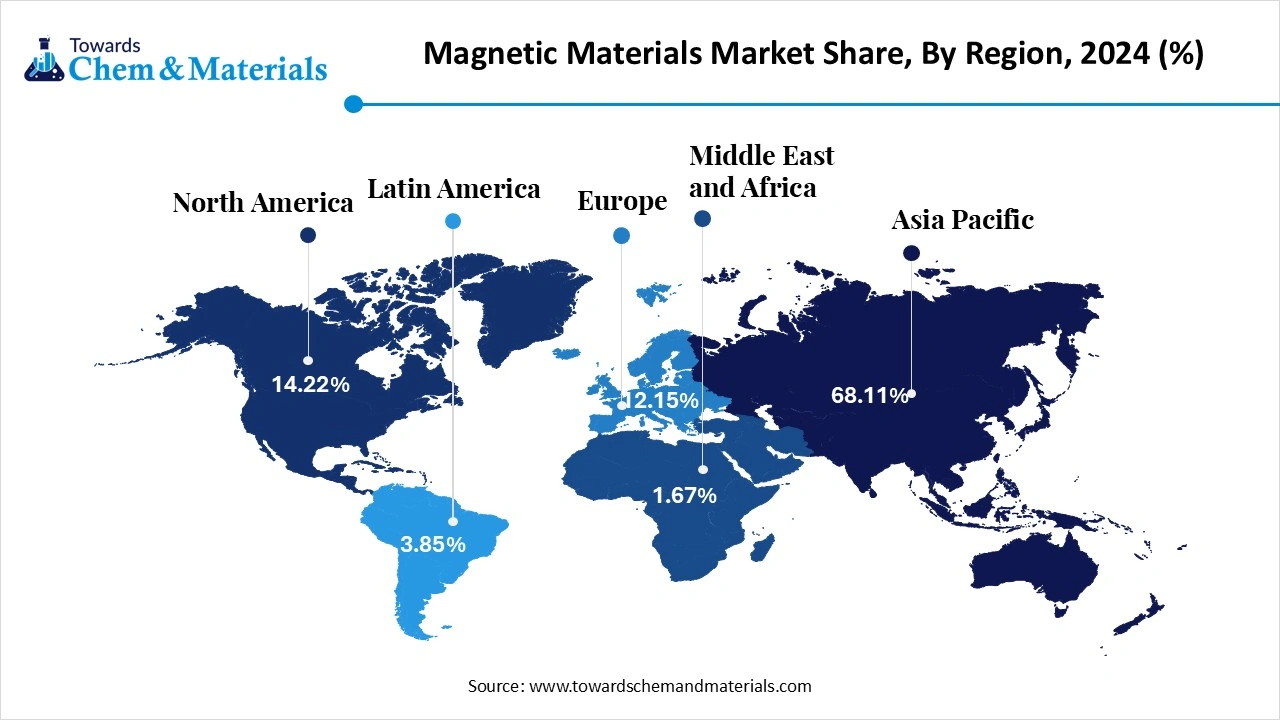
The global magnetic materials market size was estimated at USD 35.58 billion in 2025 and is expected to increase from USD 37.64 billion in 2026 to USD 62.47 billion by 2035, growing at a CAGR of 5.79% from 2026 to 2035. Asia Pacific dominated the magnetic materials market with the largest revenue share of 68.33% in 2025.
Magnetic Materials Market Key Takeaways
- The Asia Pacific dominated magnetic materials market share of 68.33% in 2025, due to strong industrialization, a strong automotive sector, and increasing demand from the electronics and telecommunications industries.
- The Europe expects fastest growth in market during the forecast period, due to rising demand from automotive, renewable energy, and electronics sectors.
- Based on type, soft magnetic materials segment held the dominating share of 56.19% in 2025, due to its superior magnetic properties and ability to reduce energy losses.
- Based on type, hard or permanent magnetic materials segment observed to grow at the fastest rate during the forecast period, due to its high coercivity and retentivity.
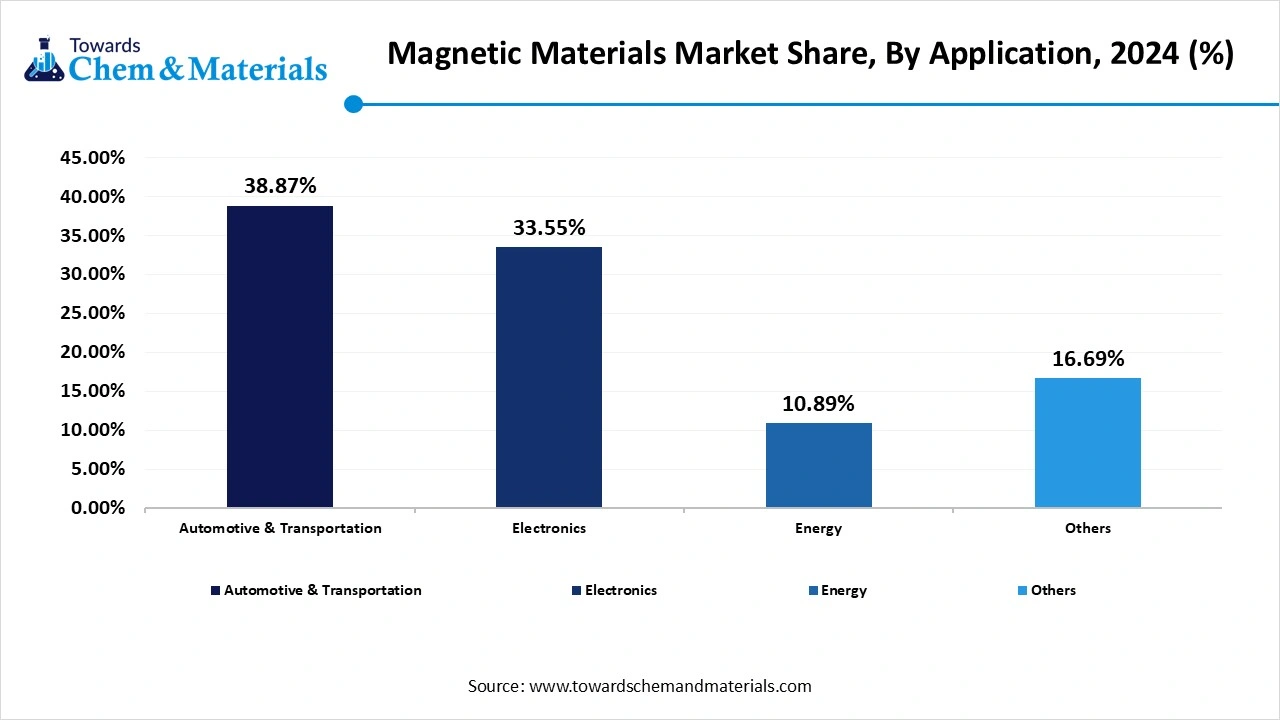
- By application, automotive & transportation segment held the dominating share of 39.11% in in 2025, attributed to increased adoption of electric vehicles and hybrid vehicles.
- By application, electronics application segment observed to grow at the fastest rate during the forecast period, attributed to widespread use of magnets in devices like smart phones, speakers, and other electronics.
Growing Automotive, Telecommunication, and Electronics Industries Demands Magnetic Materials for Improved Performance and Energy Efficiency
Magnetic materials are substance which possesses strong magnetic properties, meaning they are strongly attracted to magnets. These materials plays very important role in various technologies due to their ability to interact with magnetic fields. Iron, cobalt, nickel, neodymium, and their alloys are used to create permanent magnets.
Booming automotive and electronics industry demands magnetic materials drive the market. In the automotive sector magnets are used for electric motors in hybrid and electric vehicles, fuel pumps, and various control systems. In electronics, they are used for motors, transformers, sensors, and magnetic storage. Advancement in neodymium-iron-boron magnets, alter magnetic materials, and nanostructured magnets are showing impact on various industries including electronics, renewable energy, and transportation, further boost the magnetic materials market.
Magnetic Materials Market Trends
- Rising demand for automotive industry: Increasing use of electric vehicle demands magnetic materials for high performance magnet in the motors and other component. Magnetic materials are widely used in improving energy efficiency in various applications including the electric steering, braking, and throttle actuation, further drive the market.
- Advancements in Electronics: Advancement in electronics drives the market growth by creating new product. Smart home devices, wearable technology, and AI powered appliances are fulfilling the consumer needs and create new market opportunities. Advancement in electronics allows for better performance, efficiency, further boost the market.
- Growth in Wind Energy: The growing demand for wind energy demands magnetic materials for rare earth elements like neodymium and dysprosium. In wind turbine generators to convert wind energy into the electricity the magnetic materials are used. Increased demand of Neodymium and dysprosium in the production of strong permanent magnet, further drives the magnetic materials market.
Market Report Scope
| Report Attributes | Details |
| Market Size in 2026 | USD 37.64 Billion |
| Expected Market Size by 2035 | USD 62.47 Billion |
| Growth Rate from 2026 to 2035 | CAGR 5.79% |
| Base Year of Estimation | 2025 |
| Forecast Period | 2025-2034 |
| High Impact Region | Asia Pacific |
| Segment Covered | By Type, By Application, By Region |
| Key Companies Profiled | Daido Steel Co. Ltd., Arnold Magnetic Technologies Corporation, Electron Energy Corporation, Tengam Engineering, Inc., Hitachi Metals Ltd., TDK Corp,Shin-Etsu Chemical Co. Ltd., Molycorp Magnequench, Lynas Corporation Ltd. |
Magnetic Materials Market Opportunity
Booming Automotive and Electronic Industry
Booming automotive and electronic industries shows significant market opportunities for magnetic materials market. Rising adoption of the electric vehicle demands magnetic materials, particularly in electric motors and power electronics systems. Increasing concern about fuel economy and vehicle weight are allowing to use lighter and more efficient magnetic materials in automotive components like motors actuators and sensors shows future market opportunities for magnetic materials. Magnetic materials is used in electronic industry in wide arrange of electronic devices, including computer and mobile phones, may drive the market in future.
Emerging Technologies
Innovations in energy, electronics, and transportation shows future market opportunities for magnetic materials. Lighter and more energy efficient magnetic materials are very important for electric vehicles and other transportation application demands magnetic materials. Emerging technologies like spin electron in magnetic materials to develop the ultra fast and low power electronic devices, may open the door for future market opportunities. Magnetic materials are used in hard disk drives and other data storage technologies are also showing future magnetic materials market opportunities.
Value Chain Analysis
- Raw Material Extraction: This involves the mining and extraction of essential raw materials, including iron ore, aluminum, cobalt, nickel, and crucial rare earth elements.
- Key Players: Lynas Rare Earths and Rio Tinto, and Iluka Resources.
- Processing & Refining: These extracted ores undergo complex, often environmentally sensitive, chemical processing and refining to achieve high purity.
- Key Players: Silmet, Molycorp Magnequench, and Shin-Etsu Chemical Co., Ltd.
- Magnet Manufacturing: The refined metals and alloys are transformed into finished magnets using various techniques such as sintering and bonding.
- Key Players: Hitachi Metals, TDK Corporation, Daido Steel Co., Ltd., Shin-Etsu Chemical Co., Ltd., and Arnold.
- Distribution & Logistics: In this, finished magnets are distributed globally to various end-user manufacturers, including Original Equipment Manufacturers (OEMs).
- Key Players: Adams Magnetic Products Co. and Dexter Magnetic Technologies.
- Application & Integration: In this, the magnetic materials are integrated as critical components into final products and systems.
- Key Players: BYD, Tesla, Siemens, and Vestas.
Magnetic Materials Market Challenges
Raw Material Availability and Volatility
Raw material volatility and availability significantly limit the magnetic materials market. Unexpected price fluctuation and shortage hinder the growth of industry. Increased cost makes it difficult to compete with producers. Instability of raw material prices leads uncertainty about the long term viability of investment in the industry, limits the market. Disruption in the supply chain causes delays in production, increases the transportation cost and impact overall cost of magnetic materials. The high cost and volatility of rare earth element, like those used in permanent magnet for motors and other applications make them less accessible and more expensive to manufacture, further limits the market.
Segmental Insights
Type Insights
The soft magnetic materials segment held the dominating share of magnetic materials market share of 56.19% in 2025. Due to versatility of soft magnetic materials along with application in various sectors including vehicle, renewable energy, and consumer electronics contribute to market growth of soft magnetic materials segment. The expansion of renewable energy sources like wind and solar power needs the soft magnetic material in generator and converter. This material is also used in automotive industry including electric motors and alternators, boost market growth. Soft magnetic material helps to reduce energy losses and improve the overall efficiency of electronic equipment’s which increases their demand in variety of applications.
The hard or permanent magnetic materials segment observed to grow at the fastest rate during the forecast period. Hard magnetic materials including alnico and ferrite are known as permanent magnet which has coercive force and remanence. They are difficult to demagnetize, requires strong external magnetic field to reverse magnetization. Wide range of application of permanent magnets in the electric motors, generator and loudspeakers, boost the market.
Application Insights
The automotive & transportation segment held the dominating share of magnetic materials market share of 38.95% in in 2025. Rising adoption of electric vehicles and hybrid vehicles increases demand of magnetic materials. Advanced magnetic materials help to improve the efficiency of electric motors and other components, which is important for extending the range and reducing energy consumption of electric vehicles. The use of magnetic materials can reduce overall vehicle weight and improves fuel efficiency further driving the market growth of automotive segment. Magnetic levitation and Evacuated Tube Transportation technologies are high-speed transportation options, dependent on magnetic materials for levitation and propulsion further drives the market.
The electronics application segment observed to grow at the fastest rate during the forecast period. Increased demand of consumer electronics, telecommunication, and electric vehicles contribute to market growth of electronics application segment. Rising popularity of smart phones and other consumer electronic devices increases need of smaller and more efficient magnetic component in various applications, boost the market. Advanced computing power and storage system are also benefiting by using magnetic materials in flash memory and other storage technologies, further drive the market
Regional Insights
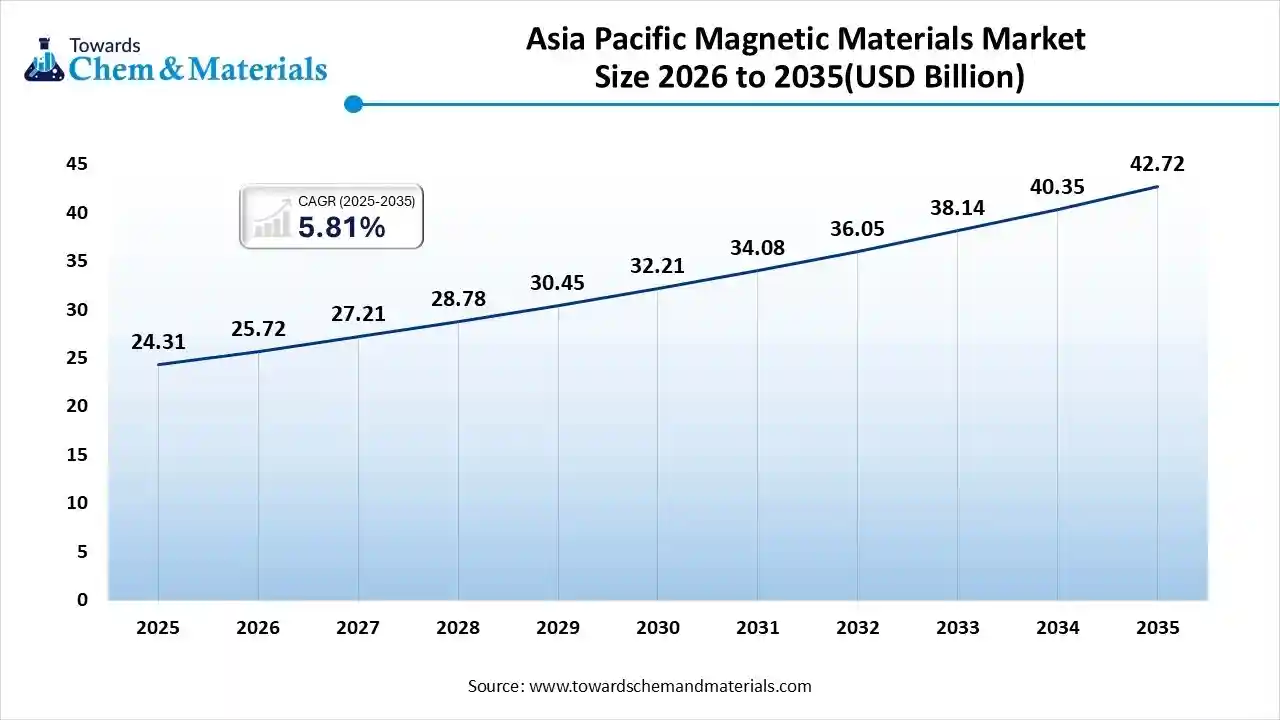
The Asia Pacific magnetic materials marketsize was valued at USD 24.31 billion in 2025 and is expected to reach USD 42.72 billion by 2035, growing at a CAGR of 5.81% from 2026 to 2035. Strong industrial growth, technological advancements, and high demand in various sectors contribute to the market growth across this region. In Asia Pacific rapid economic growth particularly in countries like China, India, and South Korea increases demand of magnetic materials in various applications.
Various technological advancements in industries increase the demand for advanced magnetic materials with improved performance and efficiency. Booming automotive industry, specifically growth of electric vehicle market, significantly boosts the demand for magnetic materials used in electric motors and generators. Asia pacific region is major center of electronic manufacturing which increases need of magnetic materials in telecommunication and consumer electronics boost the market.
Germany Magnetic Materials Market Trends
Germany plays a crucial role in the global market, primarily due to its high-performance manufacturing capabilities, strong research and development base, and the challenge of managing its reliance on imported raw materials. The country is a leading producer of high-performance magnets and components, particularly for its well-known automotive, industrial machinery, and consumer electronics sectors. However, Germany is highly dependent on imports for raw materials, necessitating efforts to diversify sources and enhance recycling capacity to mitigate supply risks.
How will North America Surge in the Magnetic Materials Market?
North America is another significant region in the global market, driven mainly by strong demand from advanced industries, a focus on securing domestic supply chains, substantial investments in research and development, and robust government support. It serves as a hub for technological innovation, with major R&D funding focused on improving manufacturing techniques, enhancing material performance, and developing alternatives that do not rely on rare-earth elements. Both the U.S. and Canadian governments are actively promoting the establishment of domestic supply chains for rare-earth magnets to reduce reliance on imports.
U.S. Magnetic Materials Market Trends
The U.S. is emerging as a key player in the global market, characterized by high demand and strategic initiatives aimed at securing its domestic supply chain for critical magnetic materials essential for the electric vehicle, renewable energy, and defense sectors. Both the government and private sectors are making significant investments in domestic production, processing, and recycling facilities for rare earth elements (REE) to reduce reliance on imports for electric vehicles and wind turbines.
Emergence of Latin America in the Magnetic Materials Market?
Latin America is also making strides in the global market, largely due to its abundant reserves of key critical minerals such as lithium, copper, and rare-earth elements, coupled with rising demand from the clean energy and electric vehicle sectors. The global energy transition and the region’s commitment to renewable energy are key drivers of this growth. Magnetic materials, particularly high-performance neodymium magnets, are essential for efficient electric vehicle motors and wind turbines, further boosting demand for magnetic materials used in servo motors, sensors, and actuators.
Brazil Magnetic Materials Market Trends
Brazil plays a vital role in the magnetic materials market as a potential major supplier of raw materials, utilizing its significant natural resources to develop a domestic value chain. The country has the world's third-largest reserves of rare earth elements and is emerging as a crucial alternative to China for global supply chains. The Brazilian government is implementing policies and funding initiatives, such as the Strategic Minerals Equity Investment Fund, to accelerate the licensing process for mining projects.
How will Middle East and Africa contribute to the Magnetic Materials Market?
The Middle East and Africa are also important contributors to the global market, largely due to rapid infrastructure development, significant investments in renewable energy and electric mobility, and efforts to diversify economies away from a traditional reliance on oil and gas. The region’s transition to renewable energy, including major solar and wind projects, necessitates advanced magnetic materials for efficient turbines and systems. An expanding manufacturing base, particularly in Saudi Arabia, South Africa, and the UAE, is driving demand for magnetic materials used in industrial equipment.
UAE Magnetic Materials Market Trends
The UAE is emerging as a market with a strategic focus on economic diversification, aiming to position itself as a regional hub for high-tech industries and advanced manufacturing. It functions as a logistics and trade hub, providing opportunities for international suppliers of magnetic materials to establish a regional presence. Government initiatives and a push to develop a knowledge-based economy are creating a favorable environment for the adoption of advanced materials and niche solutions in sectors such as healthcare and aerospace.
Magnetic Materials Market Recent Developments
Hirst
- Product Launch: In March 2023 Hirst launched 8th generation of Permanent Field Magnetometers and have Self-Demagnetization Field Function (SDFF™) technology. This permanent field magnometer have feature like eddy current correctection using F-2F algorithm and can measure a wide range of sample shapes.
Anchor Magnets
- Product Launch: In April 2023, Anchor Magnets introduced supamag ULTRA, a magnetic sheet which is thinner, lighter, and stronger than traditional magnetic sheets. This product is designed to be more efficient and greener which reduces environmental impact.
Bunting Magnetics Europe
- Product Launch: In September 2024, Bunting Magnetics Europe launched a high-performance samarium cobalt magnet, specifically the YXG-35H grade. This magnet is the most energy-dense and high-performance samarium cobalt (SmCo). It is mainly designed for demanding aerospace and high-end motorsport application.
Top Companies List
- Daido Steel Co. Ltd.
- Arnold Magnetic Technologies Corporation
- Electron Energy Corporation
- Tengam Engineering, Inc.
- Hitachi Metals Ltd.
- TDK Corp
- Shin-Etsu Chemical Co. Ltd.
- Molycorp Magnequench
- Lynas Corporation Ltd.
Segments Covered in the Report
By Type
- Hard/Permanent
- Semi-hard
- Soft
By Application
- Automotive & Transportation
- Electronics
- Energy
- Others
By Region
- North America
- U.S.
- Canada
- Europe
- Germany
- UK
- France
- Italy
- Spain
- Sweden
- Denmark
- Norway
- Asia Pacific
- China
- Japan
- India
- South Korea
- Thailand
- Latin America
- Brazil
- Mexico
- Argentina
- Middle East and Africa (MEA)
- South Africa
- UAE
- Saudi Arabia
- Kuwait
FAQ's
Question 1 : What is the global magnetic materials market size ?
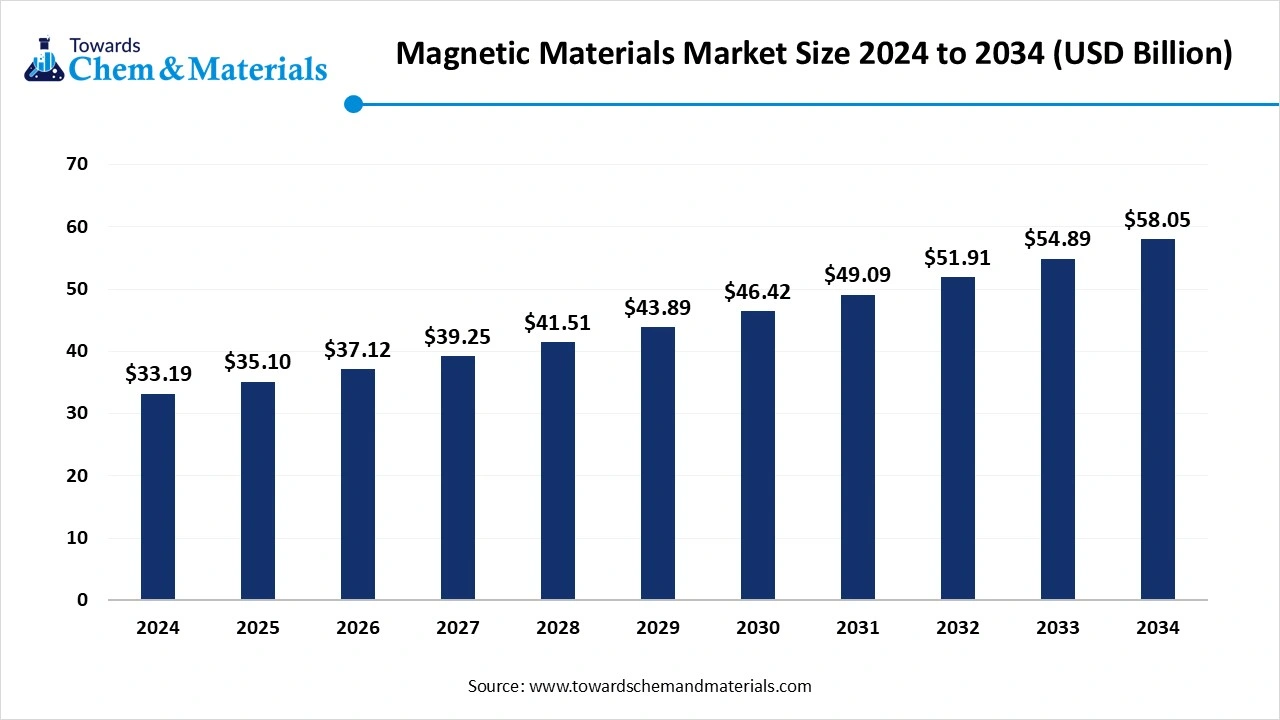
Answer : The global magnetic materials market size was estimated at USD 33.19 billion in 2024 and is predicted to increase from USD 35.10 billion in 2025 to approximately USD 58.05 billion by 2034, expanding at a CAGR of 5.75% from 2025 to 2034. In 2024 Asia Pacific held a dominant magnetic materials market position, capturing more than a 68.11% share and holds a USD 22.61 Billion market value for the year.
Question 2 : Which regions will lead and grow the fastest in the magnetic materials market?
Answer : Asia Pacific dominates with 68.11% market share in 2024 (~USD 22.61B) and will grow from USD 23.91B in 2025 to USD 39.62B by 2034 (CAGR 5.77%), fueled by EV production, electronics manufacturing, and industrial growth in China, Japan, and South Korea. Europe will see the fastest growth, supported by green technology adoption, renewable energy projects, and EV electrification.
Question 3 : What are the major growth drivers for the magnetic materials market?
Answer : Electric mobility: Strong demand for permanent magnets in EV motors, sensors, and actuators. Renewable energy: High-performance magnets in wind turbine generators. Electronics miniaturization: Growing use in smartphones, wearables, and smart home devices. Industrial automation: Increased use of precision motors and magnetic sensors. High-performance computing & data storage: Advanced magnets in memory and HDD applications.
Question 4 : What technological advancements are disrupting the magnetic materials market?
Answer : Nanostructured magnets for superior coercivity and thermal resistance. 3D-printed magnetic components for custom applications. Magnetocaloric materials for solid-state refrigeration. Spintronics leveraging magnetic materials for low-power electronics. Lightweight composite magnets enhancing efficiency in EVs and aerospace.
Question 5 : What are the major challenges for the magnetic materials market?
Answer : Raw material volatility: Price fluctuations in rare earths like neodymium and dysprosium. Geopolitical supply risks: Heavy dependence on China for rare earth mining and processing. High manufacturing costs for advanced permanent magnets. Environmental concerns in rare earth mining and processing.
Question 6 : Who are the top companies in the magnetic materials market?
Answer : Daido Steel Co. Ltd., Arnold Magnetic Technologies Corporation, Electron Energy Corporation, Tengam Engineering, Inc., Hitachi Metals Ltd., TDK Corp,Shin-Etsu Chemical Co. Ltd., Molycorp Magnequench, Lynas Corporation Ltd.
Meet the Team

Saurabh Bidwai
Principal Consultant
Saurabh Bidwai, a B.Tech Chemical Engineering graduate with 4+ years of experience, specializes in specialty chemicals, commodity chemicals, and engineered materials, offering valuable insights into market trends and emerging opportunities.

Aditi Shivarkar
Reviewed By
Aditi Shivarkar, with 14+ years in Chemical and Materials market research, specializes in Chemical and Materials. She ensures accurate, actionable insights, driving Towards Chemicals And Materials Analytics and Consulting excellence in industry trends and sustainability.