
Polypyrrole Bioelectronics Market Manufacturers & Suppliers Company Analysis 2026-2035
The global polypyrrole bioelectronics market size is expected to grow from USD 361.36 million in 2026 to USD 1,424.08 million in 2035, growing at a CAGR of 5.25% from 2026 to 2035. The top key players in the market are Merck KGaA, Heraeus Group, ORGACON, Blackrock Neurotech, Medtronic, Hyperion Catalysis, Parker Hannifin Corporation, Celanese Corporation, KEMET Corporation, Solvay SA, Agfa-Gevaert N.V., Sigma-Aldrich, Abbott & F. Hoffmann-La Roche, Rieke Metals-Global Forecast 2026 To 2035
Content
What is the Current Polypyrrole Bioelectronics Market Size and Share?
The global polypyrrole bioelectronics market size was estimated at USD 310.29 million in 2025 and is expected to increase from USD 361.36 million in 2026 to USD 1,424.08 million by 2035, growing at a CAGR of 5.25% from 2026 to 2035. North America dominated the polypyrrole bioelectronics market with the largest revenue share of 40.82% in 2025. The growth of the market is driven by high electrical conductivity, stability, and ease of functionalization, fueling demand.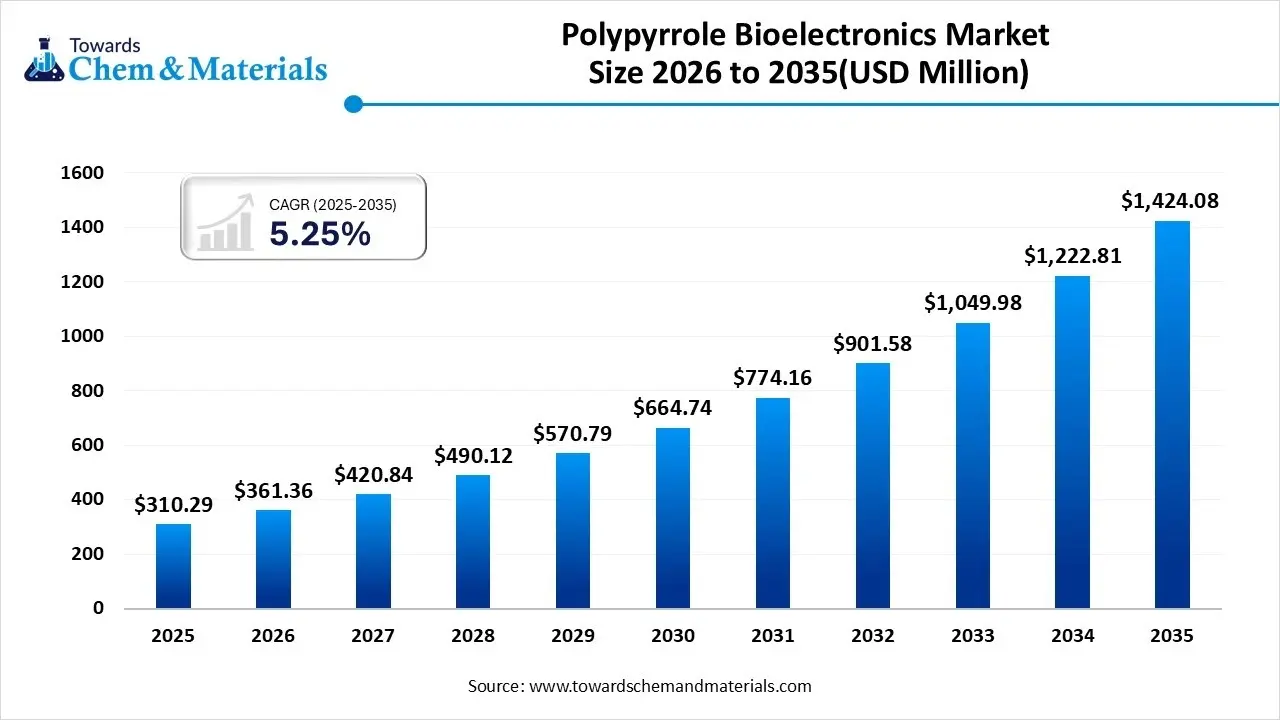
Market Highlights
- The North America dominated the conformal coatings market with the largest revenue share of 40.82% in 2025.Increasing use of bioresorbable and flexible electronics in personal health monitoring is accelerating market demand.
- By product type, the pure polypyrrole (PPy)segment dominated the market and accounted for the largest revenue share of 48.19% in 2025. Offers superior electrochemical responsiveness, making it ideal for high-sensitivity sensors.
- By application, the electrochemical & enzymatic biosensors segment led the market with the largest revenue share of 37.83% in 2025, driven by its widespread use in developing rapid, real-time, and portable diagnostics.
Market Overview
What is the Significance of the Polypyrrole Bioelectronics Market?
The polypyrrole (PPy) bioelectronics market is significant for enabling advanced, biocompatible, and flexible interfaces between electronics and biological systems, fueling the growth of the market. Due to its high electrical conductivity, stability, and ease of functionalization, PPy is critical for next-generation neural implants, biosensors, and drug delivery systems.
Market Recent Trends:
- High-Performance Neural Interfaces: The primary driver is the demand for flexible, biocompatible electrodes that reduce impedance and improve signaling in neural implants and electroceuticals.
- Nanocomposite Development: To overcome limitations in pure polypyrrole, the market is focusing on nanostructured PPy composites to enhance conductivity, surface area, and stability in physiological environments.
- Biosensors and Wearables: PPy is increasingly used in disposable, high-sensitivity sensors for food safety and wearable healthcare monitors due to its excellent redox properties.
Report Scope
| Report Attribute | Details |
| Market Size and Volume in 2026 | USD 361.36 Million |
| Revenue Forecast in 2035 | USD 1,424.08 Million |
| Growth Rate | CAGR 5.25% |
| Forecast Period | 2026 - 2035 |
| Base Year | 2025 |
| Dominant Region | Asia Pacific |
| Segment Covered | By Product Type, By Application, By Regions |
| Key companies profiled | Merck KGaA, Heraeus Group, ORGACON, Blackrock Neurotech, Medtronic, Hyperion Catalysis, Parker Hannifin Corporation, Celanese Corporation, KEMET Corporation, Solvay SA, Agfa-Gevaert N.V., Sigma-Aldrich, Abbott & F. Hoffmann-La Roche, Rieke Metals |
Key Technological Shifts in the Polypyrrole Bioelectronics Market:
The polypyrrole (PPy) bioelectronics market is driven by the integration of flexible electronics, nanotechnology, and advanced synthesis techniques, such as electro-polymerization, for enhanced biocompatibility and conductivity. Key shifts include moving toward bioresorbable, 3D-printable, and self-healing materials, alongside combining PPy with hydrogels or conductive fillers to improve neural interfaces and biosensors.
Trade Analysis Of Polypyrrole Bioelectronics Market: Import & Export Statistics
- According to Global Export Data, from July 2024 to June 2025 (TTM), the world shipped 997 Pyrrole consignments to 257 buyers via 256 verified exporters.
- The United States, the United Kingdom, and Germany are the leading Pyrrole importers, while the top exporters are India with 1,086 shipments, China with 1,024 shipments, and the United States with 252 shipments.
- During the same period, 4,543 Polymer Polyol shipments were exported globally, involving 571 verified exporters and 762 buyers, reflecting a 10% year-over-year growth.
- Vietnam, India, and Russia are the leading Polymer Polyol importers. Meanwhile, China with 9,047 shipments, Thailand with 795 shipments, and the Netherlands with 737 shipments are the top exporters globally.
Market Value Chain Analysis
Polymer Synthesis & Device Fabrication
- Polypyrrole for bioelectronics is produced through chemical or electrochemical polymerization of pyrrole monomers, followed by doping, film deposition, nanostructuring, and integration into flexible substrates for biosensors, neural interfaces, tissue engineering scaffolds, and wearable bioelectronic devices.
- Key players Heraeus Group, Merck KGaA, Sigma-Aldrich (part of Merck), Agfa-Gevaert Group
Quality Testing and Certification
- Polypyrrole bioelectronic materials require certifications ensuring biocompatibility, electrical conductivity stability, cytotoxicity safety, and regulatory compliance for medical applications. Key certifications include ISO 10993 biocompatibility standards, FDA approvals for implantable or diagnostic use, REACH compliance, and ASTM material testing standards.
- Key players: ISO (International Organization for Standardization), FDA (U.S. Food and Drug Administration), ASTM International, TÜV SÜD.
Distribution to Industrial Users
- Polypyrrole bioelectronic materials are supplied to medical device manufacturers, biosensor developers, research institutions, neural interface companies, and wearable healthcare technology firms.
- Key players: Heraeus Group, Merck KGaA, Agfa-Gevaert Group.
Polypyrrole Bioelectronics Regulatory Landscape: Global Regulations
| Country / Region | Regulatory Body | Key Regulations | Focus Areas |
| United States | (FDA) (EPA) |
FDA 21 CFR (Medical Devices) Biocompatibility under ISO 10993 TSCA (chemical control) |
Device safety & efficacy Biocompatibility testing Chemical substance registration |
| European Union | (EMA) (ECHA) |
Medical Device Regulation (MDR 2017/745) REACH Regulation CE Marking requirements |
Safety & clinical evaluation Chemical registration Environmental compliance |
| India | (CDSCO) | Medical Device Rules, 2017 BIS standards |
Device classification & approval Import licensing |
Segmental Insights
Product Type Insights
Which Product Type Segment Dominated the Polypyrrole Bioelectronics Market In 2025?
The pure polypyrrole (PPy) segment dominated the market share 48.19% in 2025, due to its high intrinsic conductivity, ease of synthesis, and excellent biocompatibility, which support the growth of the market. Its leading position is driven by widespread use in foundational research, wearable biosensors, and implantable electrodes, which further support the growth and expansion of the market. The segment is driven by demand in electrochemical/enzymatic biosensors, nerve repair, and wearable devices.
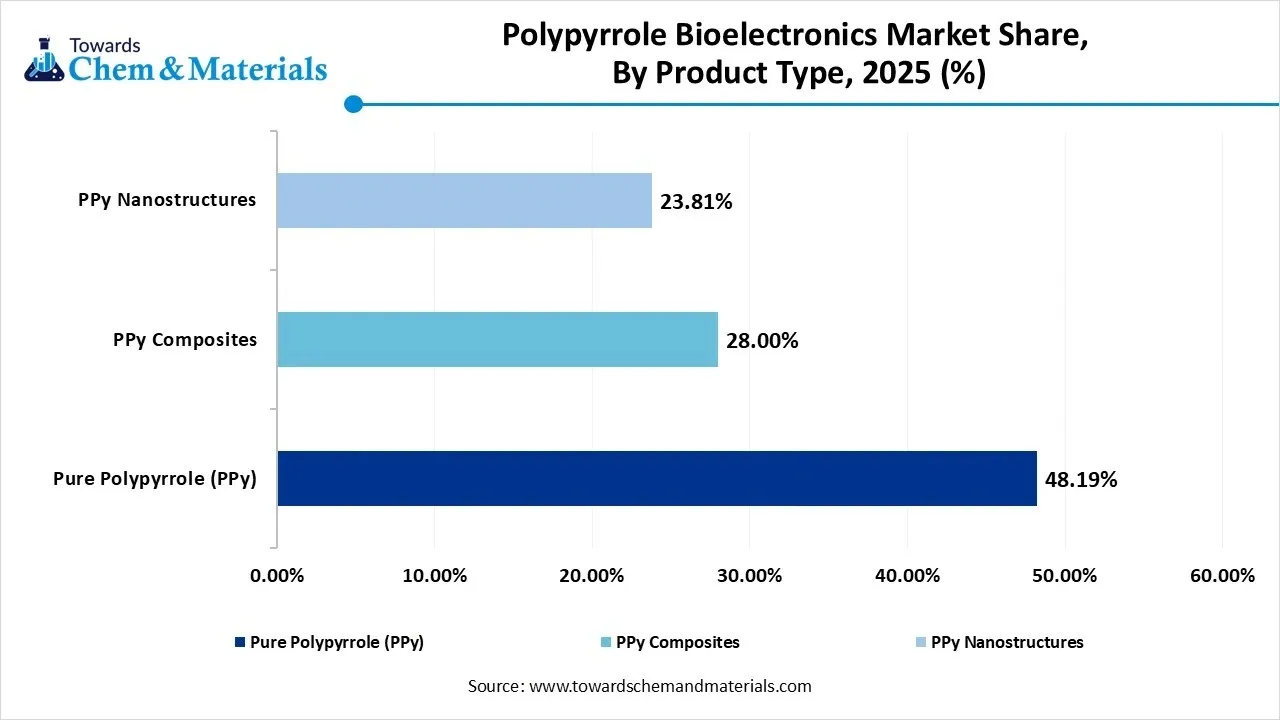
The PPy composites segment is projected to grow at the fastest CAGR between 2026 and 2035 in the market, driven by their enhanced mechanical and electrical properties for advanced, flexible, and biocompatible technologies. While the overall conductive polymer market sees rapid expansion, specifically, PPy-based composites are widely recognized for their potential to overcome the limitations of pure Polypyrrole through hybridization.
Polypyrrole Bioelectronics Market Share, By Product Type, 2025 (%)
| By Product Type | Revenue Share, 2025 (%) |
| Pure Polypyrrole (PPy) | 48.19% |
| PPy Composites | 28.00% |
| PPy Nanostructures | 23.81% |
Application Insights
How did Electrochemical & Enzymatic Biosensors Dominate the Polypyrrole Bioelectronics Market in 2025?
The electrochemical & enzymatic biosensors segment dominated the market share 37.83% in 2025, due to the polymer's excellent electrical conductivity, biocompatibility, and ability to act as a versatile, stable matrix for immobilizing enzymes. This dominance was fueled by high demand for precise, low-cost point-of-care (POC) diagnostic tools, particularly for glucose monitoring, lactate, and neurotransmitter sensing. PPy provides high sensitivity, selectivity, and stability when used as an electrode material in amperometric biosensors.
The wearable bioelectrodes & epidermal sensors segment is projected to grow at the fastest CAGR between 2026 and 2035 in the market, due to high demand for continuous health monitoring, such as ECG and hydration tracking, which fuels the growth of the market. PPy-based wearables are experiencing high adoption rates for monitoring ECG, EMG, and hydration levels, with market applications increasingly focused on real-time, continuous, and unobtrusive health diagnostics.
Polypyrrole Bioelectronics Market Share, By Application, 2025 (%)
| Application | Revenue Share, 2025 (%) |
| Electrochemical & Enzymatic Biosensors | 37.83% |
| Neural Interfaces & Implantable Electrodes | 22.00% |
| Wearable Bioelectrodes & Epidermal Sensors | 18.00% |
| Tissue Engineering | 10.00% |
| Other Applications | 12.17% |
Regional Insights
The North America polypyrrole bioelectronics market size was valued at USD 126.66 million in 2025 and is expected to be worth around USD 1,424.08 billion by 2035, exhibiting at a compound annual growth rate (CAGR) of 5.25% over the forecast period from 2026 to 2035. North America dominated the market share 40.82% in 2025, driven by advancements in neural interfaces, wearable biosensors, and tissue engineering, which propel the growth of the market in the region.
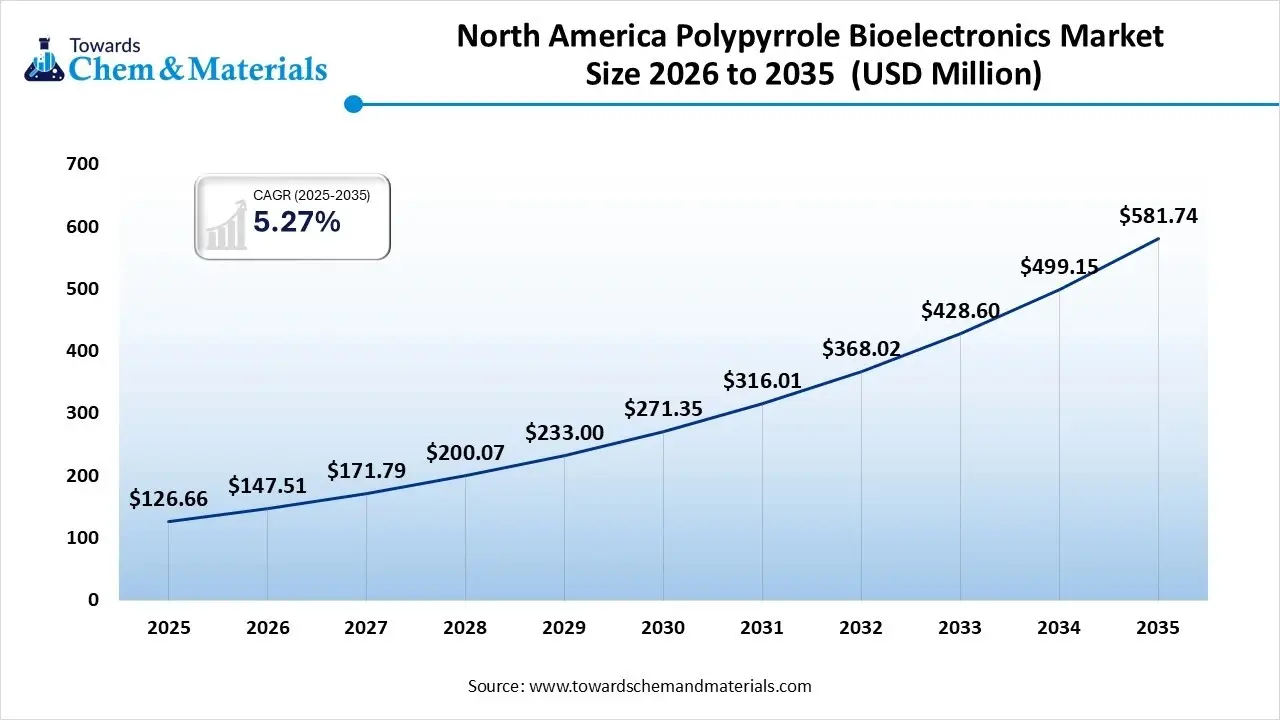
The U.S. leads the region due to high investment in R&D, sophisticated healthcare infrastructure, and strong demand for innovative medical devices. The market continues to see strong collaborations between polymer scientists and biomedical engineers, positioning the region as a leader in bioelectronic medicine.
U.S. Polypyrrole Bioelectronics Market Growth Factor
The U.S. polypyrrole (PPy) bioelectronics market is experiencing rapid growth, driven by advancements in biocompatible, conductive materials for neural interfaces, biosensors, and drug delivery systems, supporting the growth of the market. The other growth factor that drives the growth of the market is strong R&D in wearable, implantable electronics, and personalized healthcare. These factors help in the significant growth and expansion of the market in the country.
Asia Pacific Polypyrrole Bioelectronics Market Growth Factor
Asia Pacific dominated the polypyrrole bioelectronics market with the largest revenue share of 18.00% in 2025. Asia Pacific is expected to have the fastest growth in the market in the forecast period, driven by massive investment in healthcare, rising demand for wearable/implantable devices, and advancements in 5G/IoT technologies. Experiencing significant, fast-paced growth due to increasing, rapid, and widespread digitalization and industrial expansion. Other key factors include rapid urbanization, supportive government policies for industrial modernization, and strong R&D in biosensors and biocompatible electronics, supporting growth.
India Polypyrrole Bioelectronics Market Growth Factor
The Indian polypyrrole (PPy) bioelectronics market is experiencing rapid growth, driven by increasing adoption of advanced medical devices, rising investment in biosensing technologies, and a shift toward flexible, biocompatible electronics. India is experiencing exponential growth due to digital inclusion and industrial expansion, creating a favorable environment for advanced, high-tech manufacturing in bioelectronics. There is increasing investment in and demand for sophisticated biosensing technologies for diagnostics, which utilize PPy for better performance.
Europe Polypyrrole Bioelectronics Market Growth Factor
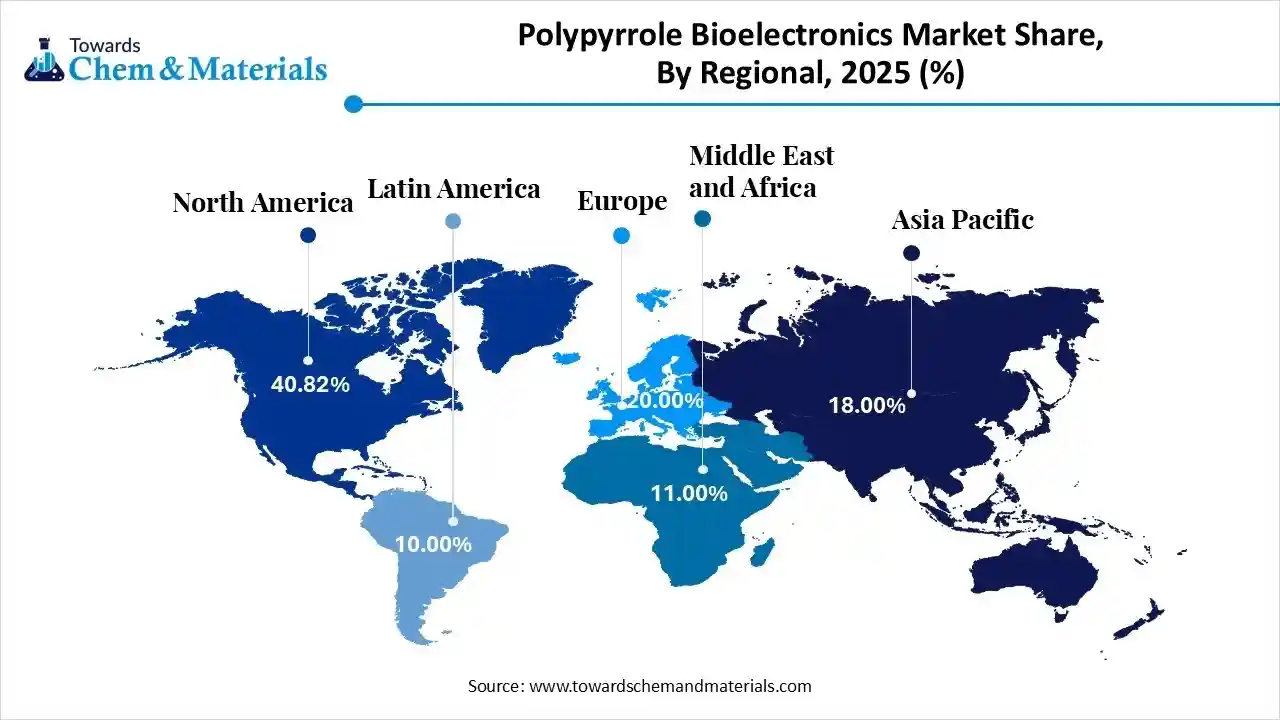
The European polypyrrole (PPy) bioelectronics market is experiencing rapid growth accounting for 20.00% of total revenue, driven by increasing adoption of biocompatible, conductive polymers in neural interfaces, biosensors, and drug delivery systems. Europe’s strong presence of medical device manufacturers and investment in advanced healthcare technologies are driving regional market expansion. The market is also supported by increasing investments in R&D and a favorable regulatory environment for medical device innovation in Europe.
Polypyrrole Bioelectronics Market Share, By Regional, 2025 (%)
| Regional | Revenue Share, 2025 (%) |
| North America | 40.82% |
| Europe | 20.00% |
| Asia Pacific | 18.00% |
| Latin America | 10.00% |
| Middle East & Africa | 11.00% |
Germany Polypyrrole Bioelectronics Market Growth Factor
The German polypyrrole (PPy) bioelectronics market is experiencing rapid growth, driven by its established medical device industry, advancements in conductive polymer synthesis, and rising demand for flexible, biocompatible sensors. Germany serves as a European hub for conducting polymer research, focusing on improving the efficiency and biocompatibility of PPy for long-term medical implants.
Recent Developments
- In June 2025, Researchers at BITS Pilani, Hyderabad Campus, have developed a Food-based Nano Conductive Paste (FN-CoP) made from edible materials like ORS, activated carbon, and gelatin, offering a non-toxic alternative for bioelectronics.(Source: timesofindia.indiatimes.com)
- In May 2025, Salvia BioElectronics secured $60 million in Series B funding to advance its MySalvia Therapy, a bioelectronic implant designed for chronic migraine treatment. The therapy uses neuromodulation targeting specific facial nerves and has received FDA Breakthrough Device Designation.(Source: www.fiercebiotech.com)
- In October 2025, Rice University hosted a summit in collaboration with ARPA-H in October 2025 to discuss implantable biohybrid devices. The event focused on accelerating the development of bioelectronic technologies to manage chronic conditions such as cancer, immune disorders, and metabolic diseases, aligning with trends in bioelectronic medicine that use electrical stimulation to treat diseases.(Source: www.eurekalert.org)
Top players in the Polypyrrole Bioelectronics Market & Their Offerings:
- Merck KGaA: Merck supplies polypyrrole (PPy) conductive polymers and precursor materials used in bioelectronic devices, coatings, and sensor platforms. Its products support high-performance electrochemical activity and biocompatibility required in biosensing and neural applications.
- Heraeus Group: Heraeus develops advanced conductive polymer compounds, coatings, and additive technologies (including PPy-based materials) for bioelectronic interfaces, implantable electrodes, and flexible sensor platforms.
- ORGACON: ORGACON produces specialty conductive polymer films and inks, including polypyrrole-derived products, tailored for biosensors, wearable electrodes, and flexible bioelectronics applications where conductivity and biocompatibility are critical.
- Blackrock Neurotech: Blackrock Neurotech integrates advanced polypyrrole-coated electrodes and conductive polymer interfaces into neural interface systems and implantable brain-computer solutions, focusing on long-term biocompatibility and electrical performance.
- Medtronic: Medtronic employs polymer-based bioelectronic materials, including conductive PPy coatings, in implantable devices, neuromodulation systems, and sensor platforms that require electrical interfacing with biological tissues.
- Hyperion Catalysis
- Parker Hannifin Corporation
- Celanese Corporation
- KEMET Corporation
- Solvay SA
- Agfa-Gevaert N.V.
- Sigma-Aldrich
- Abbott & F. Hoffmann-La Roche
- Rieke Metals
Segments Covered:
By Product Type
- Pure Polypyrrole (PPy)
- PPy Composites
- PPy Nanostructures
By Application
- Electrochemical & Enzymatic Biosensors
- Neural interfaces & Implantable Electrodes
- Wearable Bioelectrodes & Epidermal Sensors
- Tissue Engineering
- Other Applications
By Regions
- North America
- U.S.
- Canada
- Mexico
- Europe
- Germany
- UK
- France
- Italy
- Spain
- Asia Pacific
- China
- India
- Japan
- South Korea
- Latin America
- Brazil
- Argentina
- Middle East & Africa
- Saudi Arabia
- South Africa
FAQ's
Question 1 : What is the current market size and growth forecast for the Polypyrrole Bioelectronics market?
Answer : The global Polypyrrole Bioelectronics market was valued at USD 310.29 million in 2025 and is projected to grow at a CAGR of 5.25% to reach USD 1,424.08 million by 2035.
Question 2 : What are the key drivers of growth in the Polypyrrole Bioelectronics market?
Answer : The market growth is driven by the high electrical conductivity, stability, and biocompatibility of polypyrrole, fueling demand in neural implants, biosensors, and wearable bioelectronics.
Question 3 : Who are the leading companies operating in the Polypyrrole Bioelectronics market?
Answer : Leading companies in the Polypyrrole Bioelectronics market include Merck KGaA, Heraeus Group, ORGACON, Blackrock Neurotech, and Medtronic.
Question 4 : How are regulatory changes impacting the Polypyrrole Bioelectronics market?
Answer : Regulatory changes, such as FDA biocompatibility standards and EU medical device regulations, are driving innovation in biocompatible, conductive materials for medical and wearable bioelectronic applications.
Meet the Team

Saurabh Bidwai
Principal Consultant
Saurabh Bidwai, a B.Tech Chemical Engineering graduate with 4+ years of experience, specializes in specialty chemicals, commodity chemicals, and engineered materials, offering valuable insights into market trends and emerging opportunities.

Aditi Shivarkar
Reviewed By
Aditi Shivarkar, with 14+ years in Chemical and Materials market research, specializes in Chemical and Materials. She ensures accurate, actionable insights, driving Towards Chemicals And Materials Analytics and Consulting excellence in industry trends and sustainability.